
Nantucket police outline Massachusetts ebike rules, local enforcement and outreach
Get AI-powered insights, summaries, and transcripts
Subscribe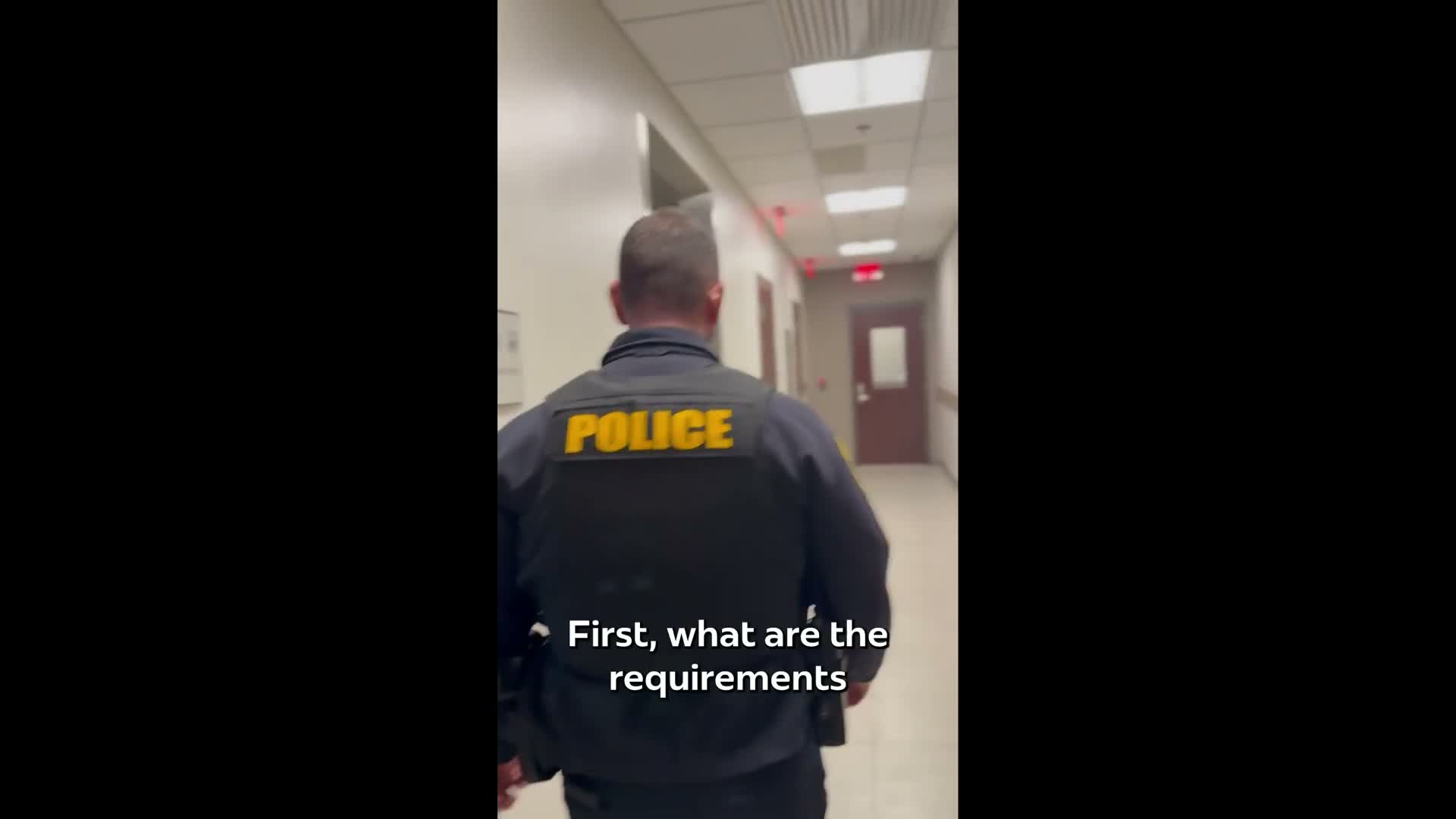
Summary
Sergeant Ray of the Nantucket Police Department summarized Massachusetts requirements for electric bicycles — pedals, 750-watt motor cap and 20 mph maximum — said officers will stop and educate noncompliant riders, and reported more helmet use and safer riding on multiuse paths.
Sergeant Ray, a sergeant with the Nantucket Police Department, described the state and local approach to newly emphasized electric-bicycle regulations in a short interview.
Asked what counts as an ebike, Sergeant Ray said Massachusetts requires that it "has to have pedals," and that "the electric motor needs a maximum output of 750 watts with a maximum speed of 20 miles an hour." He said devices that exceed those limits are classified under state rules as an electric bicycle or scooter and are treated differently under the law.
On operator requirements for devices outside the ebike limits, Sergeant Ray said the operator "would be required to have a minimum of a learner's permit, and they should not be operated on the bike path." He characterized the Nantucket Police Department's local approach as focused on monitoring and education: "Throughout their shifts, officers will be monitoring for any possible violations. Those individuals will be stopped, and they will be educated."
Reporting on early local impacts, Sergeant Ray said the department has "noticed an uptick in helmet wearing, as well as more appropriate speeds and riding behavior on the multi use fence [path]." He acknowledged the rules are new and sometimes confusing and encouraged residents and visitors with questions to "reach out to the Nantucket Police Department. We're happy to help."
The interview lays out the baseline technical limits riders should meet to be treated as ebikes under Massachusetts practice (pedals; motor ≤750 watts; assisted speed ≤20 mph), clarifies that higher-performance devices may trigger licensing and path restrictions, and explains that Nantucket officers will emphasize education while enforcing compliance. For more information or clarification, Sergeant Ray recommended contacting the Nantucket Police Department.
The department did not cite a specific statute or regulation name in the interview; details quoted here are taken directly from the department's briefing.