
Santa Barbara explains 'no-sort' approach: residents place food scraps in trash; city sorts at MRF to make compost and energy
Get AI-powered insights, summaries, and transcripts
Subscribe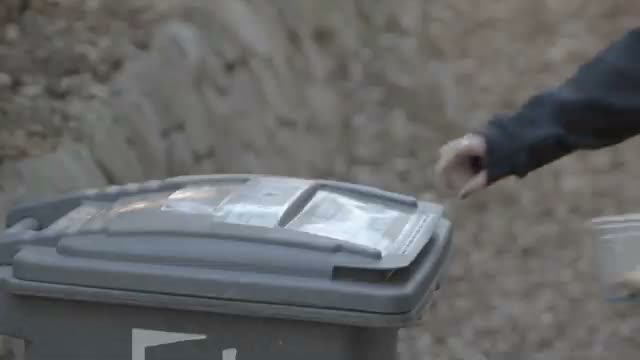
Summary
City presenters said residents can put food scraps unbagged into household trash for sorting at a local materials recovery facility; organics are diverted to an anaerobic digester that produces compost used locally and methane burned for electricity. Restaurants remain required by municipal code to separate and recover food.
Santa Barbara presenters described a residential "no-sort" approach to food scraps in which residents may place food directly into household trash, and the city's materials recovery facility (MRF) separates and diverts organics for composting and energy production.
Unidentified Speaker 2 said the policy is designed to simplify participation: "So all residents need to do is put their food directly into the trash, unbagged," and, the speaker added, when that trash reaches the resource center "the food will be sorted out and then composted." According to Unidentified Speaker 3, the facility's recovery processes pull out "roughly 80% of the organics that's in people's trash cans."
The presenters described how organics removed at the MRF are routed to an on-site anaerobic digester. Unidentified Speaker 1 said, "Those organics are then sent to the materials recovery facility's anaerobic digester, where they're transformed into compost and renewable energy." Speakers explained that bacteria break down organic material in an oxygen-free environment, producing methane and carbon dioxide; the operation captures methane and burns it to generate electricity.
Speakers framed the program as a climate and materials-management measure. Unidentified Speaker 2 contrasted composting with landfilling, saying that when organic material goes to a landfill "it tends to break down in a way that produces a lot of methane," and removing food for composting ‘‘reduces that methane from our environment.’’ The compost produced is used locally; Unidentified Speaker 1 said "much of it goes to avocado orchards right here in Santa Barbara County," describing a "full circle process from food to waste to soil to food again."
Presenters also drew a distinction between residential and commercial requirements. Unidentified Speaker 2 said restaurants "are actually required via the municipal code to sort out their food waste" and to participate in food-recovery programs so edible surplus is donated. The speakers said the city has created partnerships to connect food donors with organizations that can use it and noted the work is tied to state law, though no specific citation was provided during the remarks.
Speakers encouraged waste reduction and home composting as the preferred option when feasible. Unidentified Speaker 2 said home composting keeps material out of trucks and facilities and noted the city posts guidance on its website for residents who want to compost at home. The presenters emphasized that reduction — producing less trash, recycling, and compostable material in the first place — remains the first priority.
No formal votes or motions were recorded in the transcript; the session was an informational explanation of how the city's organics program operates and how residents and businesses are expected to participate.