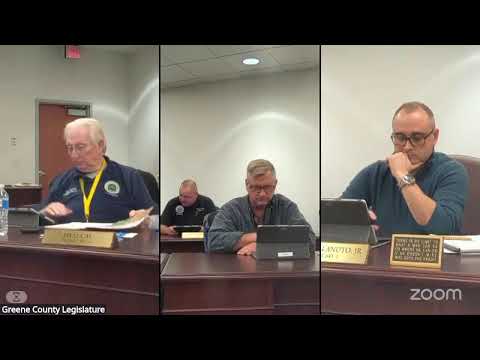
Greene County MAT participants share recovery stories as county reports program growth
Loading...
Summary
Three people in Greene County’s medication‑assisted treatment program described long recovery journeys at the Dec. 3 Health Services meeting as county staff reported program metrics: 93 active clients, 11 new enrollees in November and 40% on an injectable monthly medication.
Three people who have used Greene County’s medication‑assisted treatment (MAT) program — identified in the meeting transcript as Brie, Lindsay and James — described how county treatment and support services helped them stop using and rebuild their lives.
Donna Julianne, harm‑reduction coordinator for Greene County and an RN working in family planning, told the Health Services committee that the county’s MAT program had 93 active individuals and 11 new people enroll in November. "Because of the success of the injectable medication, 40 percent of our patients are on injectable right now," she said, and described that the injectables can reduce withdrawal and help people wean off drugs more comfortably. She added the program had 247 people recorded as inactive over time and that 13 percent of those inactive had fully weaned off opioids and other substances.
The participants described different paths into recovery and the supports that helped them stay sober. Brie said she will reach four years clean Dec. 14 and credited the treatment and support — "I go to meetings every single day. And I have a sponsor" — for stabilizing her life and reconnecting with her 10‑year‑old daughter. Lindsay described a severe car‑accident history and said the Greene County MAT program was “the first program for me that actually worked,” reporting one year and two months of continuous sobriety. James said meetings and the MAT approach had helped him maintain sobriety and regain stability in work and family life.
Committee members asked participants whether cravings ever go away; speakers said urges can persist but that the intensity lessens and that program supports (counseling, sponsor contact and ongoing check‑ins) help reduce relapse risk. Julianne said staff routinely follow up with people who leave the program — calling and checking in — and that many former patients continue to seek occasional support even after they no longer receive prescriptions.
On financing and operations, county presenters said the program bills insurance when possible and uses short‑term state assistance for those without coverage. Committee members briefly reviewed the program’s origins: staff member Lauren Churchill helped start the medication program after seeing community need, and the county adapted after a 2018 state rule change widened prescriber availability for buprenorphine and other treatments.
The committee did not take a formal vote tied specifically to the MAT presentation; members commended the participants and staff and requested continued reporting and follow‑up information on outcomes and costs.
The Health Services committee is expected to continue oversight discussions on program funding and outcomes in future meetings.