
Hardin County fiscal court rejects hiring of full-time GIS coordinator after split vote
Get AI-powered insights, summaries, and transcripts
Subscribe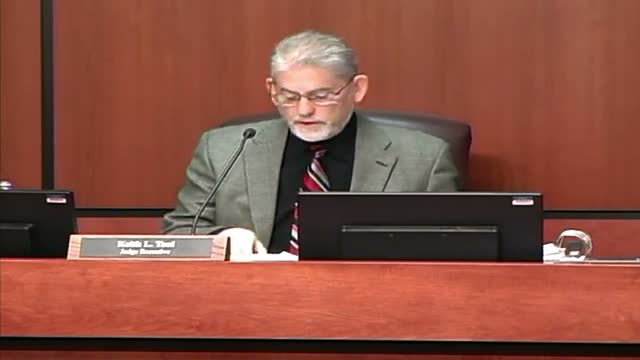
Summary
Hardin County Fiscal Court voted down resolution 246 on Dec. 18, 2025, which would have filled a budgeted full-time GIS coordinator role. The vote followed a sustained debate over cost and whether to continue contracting services with Lincoln Trail, which the court contracts for GIS work under a capped arrangement.
Hardin County Fiscal Court narrowly rejected a resolution to hire a full-time geographic information systems (GIS) coordinator, leaving a budgeted position unfilled despite the judge executive’s pledge that a candidate was ready to begin Jan. 5.
The measure (resolution 246) capped a contentious debate that centered on money, continuity and how the county should deliver mapping and infrastructure services. Supporters said an on‑staff GIS employee would provide faster, dedicated support to the county engineer and avoid reliance on outside contractors. Opponents argued that the county already has a contract with Lincoln Trail to supply GIS services (a contract the court previously approved with a cap of $85,000) and that contracting is typically cheaper than the cost of a full-time hire with benefits.
“It's a budgeted position. This person has already given her two weeks' notice. She will start Jan. 5,” the judge executive stated in defending the hire, saying the position had been treated as temporary while the county searched for a permanent employee and that losing in‑house capacity would overburden the engineering office.
Magistrates pressing for the contracting option questioned the numbers used to justify a full-time hire. One magistrate summarized the comparison used in committee hearings: contracted work logged about 40 hours at a cost of roughly $3,655, while an equivalent amount of in‑house labor would cost substantially more on an annual basis once salary and benefits were included.
Proponents countered that contractors must serve multiple counties and may not prioritize Hardin County’s urgent needs. A supporter said the county’s senior engineer has worked considerable overtime to cover mapping responsibilities since the vacancy and that a dedicated hire would reduce that burden.
After roll call produced a split outcome and an abstention, the judge announced the motion failed. Court minutes show the roll call recorded a mix of yes, no and one abstention; the judge’s announcement confirmed the resolution did not pass.
The immediate practical effect is that the county will continue operating under its existing arrangements: the previously approved contract with Lincoln Trail for GIS work (up to its cap) and ad‑hoc service provided by former staff now associated with that contractor. The judge had said the county could still call on specific contracted staff familiar with local systems, but expressed concern that relying on contract labor indefinitely could harm continuity and county services.
Next steps were not specified at the meeting beyond comments urging continued communication among magistrates and administration. The court recessed to a closed session later in the agenda to discuss pending litigation and a business proposal.