Get Full Government Meeting Transcripts, Videos, & Alerts Forever!
Get email alerts on the Scoring And Review Process topic
No spam. Unsubscribe anytime.
Bend AHEC subgroup opts for a review-sheet approach, sets deadlines to revise applications
Summary
A City of Bend AHEC subgroup recommended using a non‑numeric review sheet (rather than a binding numeric scorecard) to evaluate public services and affordable housing applications and set deadlines: staff to deliver a clean application copy by Dec. 8; members to return review-criteria edits by Dec. 29; subgroup to meet Jan. 12 to finalize recommendations for AHEC.
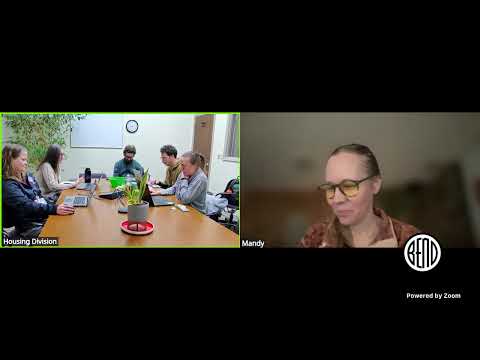
Melissa Kimonya, the City of Bend affordable housing coordinator, convened the AHEC subgroup on Dec. 1, 2025, and led members through a debate over whether the committee’s evaluation tool should be a numeric scorecard or a non‑numeric review sheet to guide deliberations.
Members expressed competing priorities: several said numerical scores can aid transparency, while others worried that treating scores as determinative can disadvantage smaller nonprofits that lack professional grant writers. Mandy Dalrymple, an AHEC member, summarized the problem: “They didn’t understand why they were scored highly, but maybe they didn’t receive funding.”
After extended discussion, multiple subgroup members endorsed using the tool primarily as a review sheet to facilitate deliberation rather than as a binding ranking. Ian Karras and others said they expect panel conversation after applicant presentations and favored a facilitative review rubric rather than final numeric judgments before deliberation. Melissa Kimonya said staff will preserve the ability to include point values internally but recommended the subgroup present the approach to the full AHEC body as a set of recommended changes.
The subgroup laid out next steps and deadlines. Melissa Kimonya said staff will compile a clean, edited version of the public services and affordable housing application questions by Dec. 8. Subgroup members were asked to return proposed edits to the review criteria by Dec. 29. The subgroup scheduled a follow-up meeting on Jan. 12, 2026, to finalize recommended edits; staff will prepare a presentation packet and aim to circulate materials to the full AHEC for review on Jan. 13 or 14.
Members also discussed options to make the review process clearer for applicants: using non‑numeric categories such as “does not meet,” “meets,” or “exceeds” for each criterion; publishing concrete examples of what each label means; and adding short narrative comments in the Neighborly platform to explain scores. Melissa Kimonya said she will check Neighborly’s export and comment capabilities and pursue technical options if the subgroup requests question‑level comments.
Supporters of the review-sheet approach emphasized equity concerns. Kimonya noted that some nonprofits have professional grant writers whose applications may read better than those from under-resourced groups, and the subgroup sought a format that would reduce administrative burden while preserving clear guidance for applicants.
The subgroup also agreed staff would help assemble a brief AHEC presentation explaining the subgroup’s approach and rationale, and members volunteered to draft slides and talking points. The subgroup adjourned after staff confirmed the Dec. 8/Dec. 29 deadlines and the Jan. 12 meeting.
What happens next: staff will produce the clean application copy on Dec. 8; subgroup members will provide edits to review criteria by Dec. 29; the subgroup will meet Jan. 12 to finalize recommendations to present to the full AHEC body.