Get Full Government Meeting Transcripts, Videos, & Alerts Forever!
Get email alerts on the Curriculum And Sel topic
No spam. Unsubscribe anytime.
EPR committee refines its purpose, prioritizes curriculum transparency and SEL integration
Summary
At its Dec. 4 meeting, East Stroudsburg Area SD's EPR committee agreed on a plan to formalize committee duties, increase transparency around curriculum work and embed social-emotional learning into the district's curriculum-writing process; administrators previewed program-of-studies and comprehensive plan timelines.
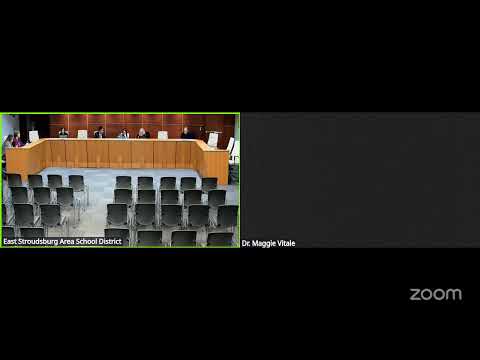
The EPR (Education, Policy and Review) committee of the East Stroudsburg Area School District on Dec. 4 moved to formalize its role in curriculum review and increase transparency for parents and staff.
The committee approved the meeting agenda at the start of the session after Speaker 4 moved the motion and Speaker 2 seconded; the motion passed with ten recorded "aye" votes. Committee discussion then turned to a board-proposed list of responsibilities for EPR, including deep dives into district programs and K'12 curriculum, approval of instructional materials consistent with community values, alignment with Pennsylvania Department of Education expectations and explicit review of purchases that could alarm stakeholders.
Administrators and committee members emphasized routine public visibility into curriculum development. "Having that kind of openness and transparency, which we really haven't had in a really, really long time, I think is key," said Speaker 2, who urged monthly updates and teacher presentations so the community can see what classrooms are doing. Speaker 4 recommended grouping textbook and curriculum approvals under a single "high-quality instructional materials" rubric to reduce redundancy.
District staff presented recent professional development and assessment work that underpins the committee's recommendations. A Nov. 4 professional day included community-led wellness sessions, a keynote and therapy dogs; Speaker 5 said the event helped staff and credited community partners for donating time. Walkthrough data compiled after the first quarter showed the district required at least one documented walkthrough per teacher each quarter; the district said preliminary analysis indicates consistent teacher enthusiasm and student engagement but noted that walkthough results vary by time of day and lesson type.
Administrators described a new curriculum framework template that lists essential questions, standards and skills for units so new and returning teachers can see where each standard is addressed over the year. "We made a point to say that this would be unit 3," said Speaker 6, describing how scope and sequence layering helps teachers build skills across grade bands.
On social-emotional learning, Speaker 1 framed SEL as classroom practice rather than a partisan program. "I boil social emotional learning down to how we interact with the world as humans," Speaker 1 said, arguing the district will embed SEL into the curriculum-writing process rather than adopt a standalone software package. The administrative team mapped CASEL's five competencies to the district's teacher-effectiveness rubric and plans to select 10 foundational SEL skills to prioritize; the committee expects to bring department chairs and a consultant into that training cycle.
Speaker 5 also previewed the program of studies (the district's course catalog) and asked committee members to review the linked draft before the January board meeting; staff recommended taking an extra month for review so the board can approve the program of studies for the 2026'27 school year at a January meeting. The committee received an update on the comprehensive plan: small admin review before Christmas, full committee in January, and a target to bring the final plan to the board for approval in February with public posting and submission by the March 30 deadline.
The meeting closed after confirming meeting dates (generally the second Thursday at 5:30 p.m., with one date adjusted for a holiday) and noting one public commenter. The committee set a follow-up to present a drafted EPR purpose statement at the next meeting.