Get Full Government Meeting Transcripts, Videos, & Alerts Forever!
Get email alerts on the Veterans History topic
No spam. Unsubscribe anytime.
Local presenter shares World War II artifacts and family service stories in Nixa
Summary
An unnamed presenter in Nixa showcased World War II artifacts, described his father’s service in the Pacific and highlighted local veterans’ careers, museum visits and patch collecting; the session was a community presentation with no formal actions.
An unnamed presenter speaking at a community event in Nixa recounted World War II service by his father and other local veterans, displayed period artifacts and urged attendees to study local military history.
The presenter began by asking veterans in the audience to identify themselves and noting the program was dedicated to local service members. He said the talk grew from work with local adult‑education resources and described his father, Bill Forbey, who graduated from Ozark High School in 1941, trained on aircraft assembly at a Northrop Grumman plant, and later served in the 37th Infantry Division in the Pacific theater. “If you’re a military veteran, I’d like to honor you guys first,” the presenter said early in the program.
He displayed wartime photographs and a collection of division patches, explaining how original World War II patches often have green thread on the back while later civilian reproductions used white thread. The presenter described phantom or decoy units used in Allied deception (Operation Fortitude) and how some insignia and props were deliberately created to mislead German reconnaissance.
The talk included a personal account of visiting the National World War II Museum, where a curator gave the presenter access to a photo archive and artifact displays. He told the audience he was allowed to handle objects in the museum collection and recounted choosing a German MG 42 prop to examine, saying those hands‑on experiences deepened his interest in veteran narratives.
The presenter also summarized stories of other family members and local veterans: a cousin, Keith Blue, whose Air Force career included navigation duties and later work connected to Lockheed Martin production; and Neil Grewal, described as a long‑time Ozark resident and former mayor who piloted many aircraft, including the P‑51 Mustang. He highlighted a rare Women’s Air Corps uniform to emphasize women's wartime roles that are less often discussed.
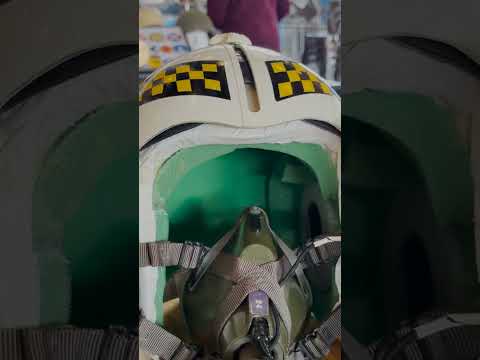
Throughout the program the presenter cited letters, newspaper clippings and campaign histories to illustrate combat conditions in the Philippines and Europe, referenced basic training at Fort Hood and troop transport on the USS Sturgis, and pointed attendees to resources for researching relatives’ wartime service. He closed by inviting attendees to examine helmets and uniforms he had brought and fielded audience questions about the artifacts’ provenance and appearance.
This was a community presentation and not a formal city or council meeting; no motions or votes were recorded. The presenter encouraged further local research and artifact sharing and made materials available after the program.