Get Full Government Meeting Transcripts, Videos, & Alerts Forever!
Get email alerts on the Traffic Calming topic
No spam. Unsubscribe anytime.
Traffic commission to study painted speed markings and temporary enforcement for Crest Road
Summary
At its Nov. 24 meeting, the Rolling Hills Traffic Commission directed staff to study painting speed limits on pavement and coordination for mobile speed signs and periodic decoy-car deployments to address reported speeding on Crest Road; staff will return with cost and implementation options by January or March.
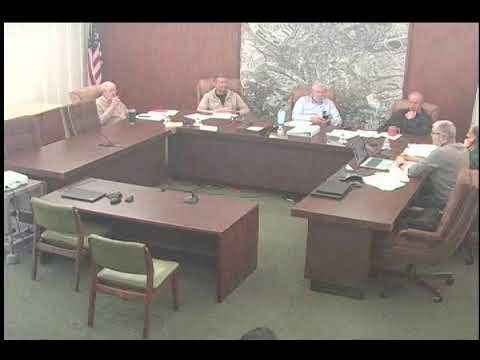
The Rolling Hills Traffic Commission on Nov. 24 directed staff to study options to slow traffic on Crest Road, including painting speed-limit markings on the pavement and coordinating temporary mobile speed signs or decoy police cars.
City staff said they would return to the commission with a cost estimate and implementation plan at the January meeting or, at the latest, the March meeting. "We will be working on that hopefully, for the January meeting," said a staff member (S2). The commission endorsed pursuing a study and periodic updates rather than immediate installations.
The discussion was prompted by repeated member and resident observations that some drivers travel 50–55 mph on Crest Road near the Quail Ridge intersection and the fire station, creating safety concerns for older pedestrians and dog walkers. A commission member (S6) said many walkers step into the center of the road to avoid traffic and that "there's no way they could move out of the way of a 50 mile an hour car." The commission noted the risk but did not authorize new enforcement at the meeting.
Commissioners and staff discussed multiple approaches: painting speed limits directly on pavement as a visual reminder, temporary mobile radar speed signs that display drivers' speeds, and occasional use of decoy (unattended) law-enforcement vehicles. Staff cautioned that state/local traffic code limits where pavement markings can be placed: staff said the California municipal traffic code generally allows painted markings adjacent to existing signs, restricting some locations for new pavement stencils without additional signage.
Deputy representatives and commissioners also discussed borrowing mobile speed signs from neighboring jurisdictions and rotating devices among hot spots. The sheriff's deputy (S3) noted the department's fleet is limited and that decoy cars and mobile devices can be effective for short deployments but require logistics and periodic relocation to remain effective. A commissioner cited an example from Hidden Hills where a stationary sign captures license plates of drivers exceeding the posted limit and issues warnings to registered motorists as an educational enforcement tool.
Staff said the next report will include a cost perspective and recommendations about working with the Rolling Hills Community Association, the council and the association's paving/striping schedule to seek cost efficiencies rather than stand-alone paint projects. The commission did not vote on a specific pavement installation or purchase of devices during this meeting; it asked staff to return with options, costs and any necessary code or council approvals.