Get Full Government Meeting Transcripts, Videos, & Alerts Forever!
Get email alerts on the Afghanistan Mission Scope topic
No spam. Unsubscribe anytime.
Senator and witnesses debate whether U.S. should have limited 2001 Afghanistan mission
Summary
An unnamed senator pressed Miss Miller and Ambassador Crocker at a Senate hearing on whether the U.S. erred by expanding the 2001 Afghanistan campaign beyond targeting al-Qaida, with Miss Miller proposing a narrower approach and Ambassador Crocker saying Taliban refusals and international commitments made that unworkable.
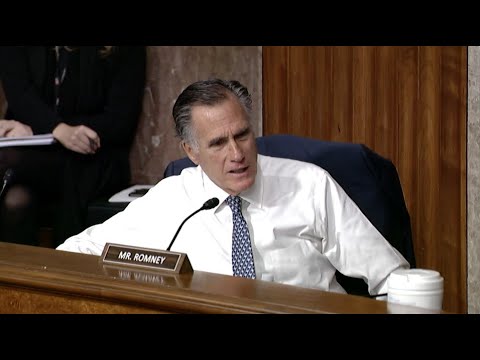
An unnamed senator questioned whether the United States made a strategic mistake in expanding its 2001 Afghanistan mission beyond targeting al-Qaida, saying the 2021 withdrawal had "showered us with shame" and arguing the country had left "thousands" behind and "abandoned women and girls." The senator addressed his questions to Miss Miller and Ambassador Crocker during a Senate hearing.
Miss Miller said a valid alternative would have been a focused law-enforcement-style campaign that pursued al-Qaida perpetrators inside Afghanistan without seeking to overthrow the Taliban. "Instead it made the decision to ... punish the al-Qaida perpetrators and essentially ignore the Taliban or perhaps inflict some punishment on them, but not to the point of overthrowing them," she said, arguing that the decision to pursue regime change drove the mission's expansion. She also cited the maxim — in the words of Colin Powell — that "you break it, you own it," and warned that regime change requires long-term strategic patience.
Ambassador Crocker rejected the premise that a narrower approach was feasible. He said the United States "gave the Taliban an out" by demanding that they hand over al-Qaida leadership, and that the Taliban's refusal "left us with no choice except to execute the mission as we did." Crocker framed the post-9/11 response as an international effort, saying the Bonn conference, held under U.N. auspices in December 2001, produced an Afghan interim authority with Karzai as its chairman and set the stage for broader reconstruction and governance work.
The exchange highlighted a central debate about U.S. policy after 9/11: whether the primary objective should have been narrow counterterrorism against the perpetrators of the attacks or a broader effort that included regime change and state-building. The senator noted public polling that favored leaving Afghanistan but said framing matters, arguing Americans might answer differently if asked whether they supported leaving in a way that "abandon[ed] girls" or degraded national security.
No formal votes or policy directives followed the exchange; the hearing continued after the questioning. The senator closed by thanking the witnesses for their testimony.