Get Full Government Meeting Transcripts, Videos, & Alerts Forever!
Get email alerts on the Technology Deployment topic
No spam. Unsubscribe anytime.
Senate hearing spotlights technology-first strategy to cut global emissions
Summary
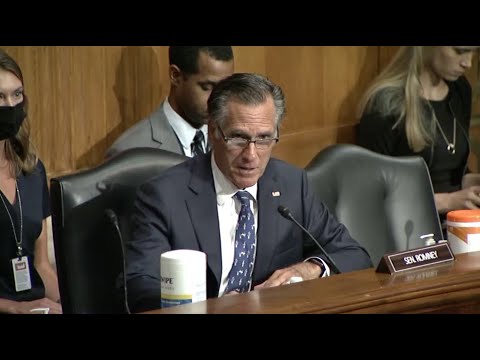
Sen. Mitt Romney and panelists emphasized a technology-focused approach — demonstrating and financing carbon-capture, advanced nuclear and long-duration storage — as the most realistic path to lower global emissions, especially in rapidly developing countries.
Sen. Mitt Romney opened the hearing by warning that ‘‘our failure to act to prevent the warming of the planet’’ will define this generation and urged solutions that can be adopted worldwide.
Panelists told the committee that near-term, specific technology demonstrations and realistic financing are the clearest path to reduce global greenhouse-gas emissions. Rich Powell said the United States already operates a mature carbon-capture sector, ‘‘We already capture and safely sequester or use for enhanced oil recovery literally millions of tons of carbon dioxide every year’’ and has ‘‘5,000 miles of carbon dioxide pipelines’’ but must deploy far more to reduce costs and prove the technology at scale.
Powell and other witnesses argued that technologies must be commercialized so developing countries choose them over cheaper coal. ‘‘You need to see something that they can believe in,’’ Powell said, describing the need for pilots, export credit and sovereign-backed financing to build large projects overseas.
Witnesses pointed to the Energy Act of 2020’s demonstration mandate as a potential vehicle for accelerating deployment and said Congress should prioritize funds for demonstrations, deployment incentives and export-credit mechanisms that can compete with China’s financing. Powell also urged permitting reform in the United States to lower the time and cost of bringing demonstration projects online.
Ms. Goodman said U.S. leadership can align with national-security needs — for example, electrifying government vehicle fleets and using microgrids at remote bases — which can both strengthen defense capabilities and provide commercial examples for broader markets.
The hearing raised few specifics about federal spending levels beyond broad recommendations for three funding streams: (1) demonstration and pilot programs for advanced technologies; (2) domestic deployment incentives and permitting reform; and (3) export-credit and development-finance packages to scale technologies overseas. No formal decisions were taken during the session.
The committee recessed as members left for Senate floor votes; the hearing is expected to continue with further panels and questions in subsequent sessions.