
Colorado Forest Health Council legislative committee targets pine‑beetle response, workforce and biomass policy for 2027
Get AI-powered insights, summaries, and transcripts
Subscribe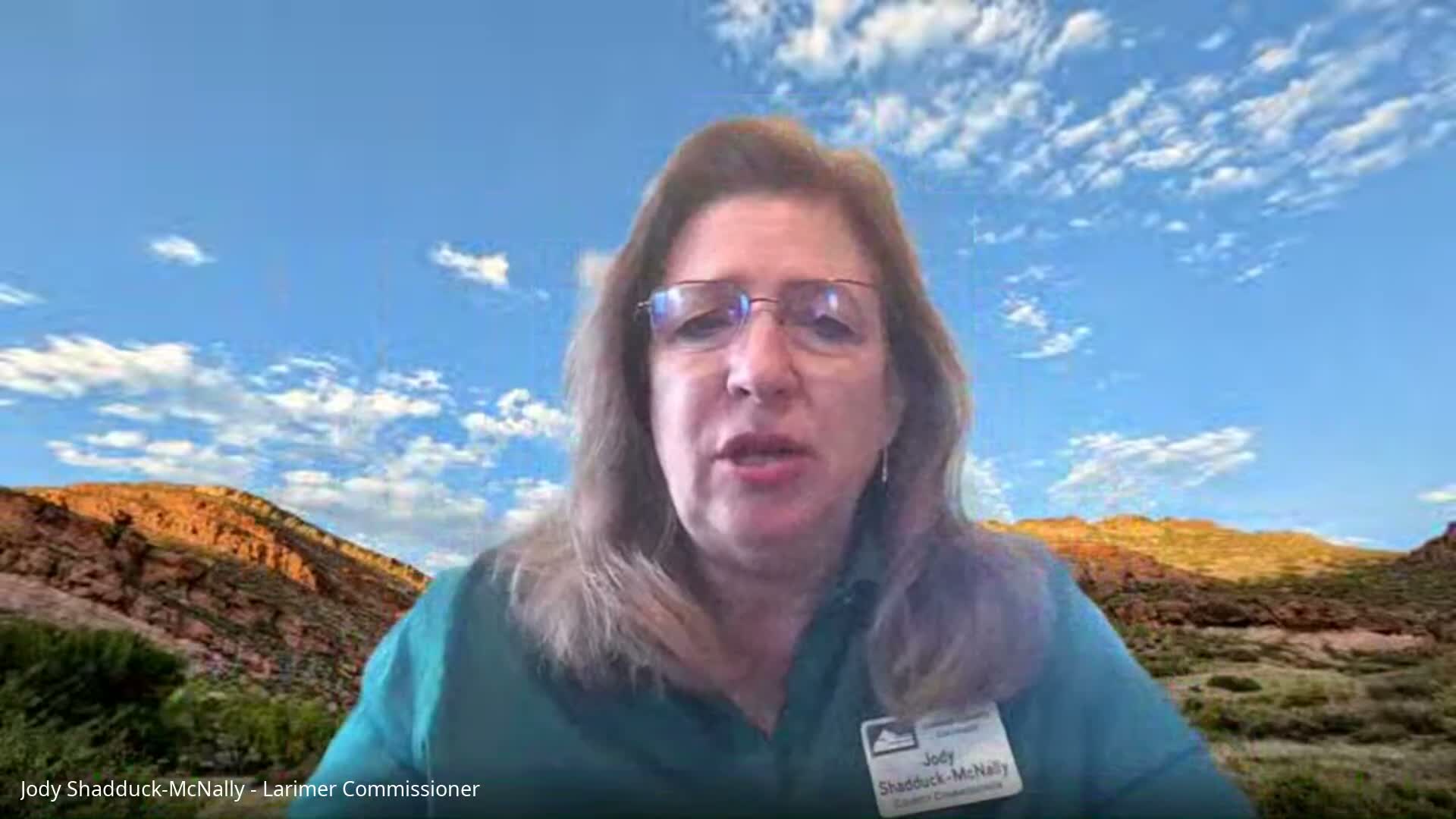
Summary
At its Dec. 12 legislative committee meeting, the Colorado Forest Health Council prioritized responses to a renewed mountain pine beetle outbreak, workforce development for forest treatments, and reforms to biomass and pile‑burning rules; members were asked to tier priorities ahead of the Dec. 19 meeting.
The Colorado Forest Health Council’s legislative committee met Dec. 12 to sharpen proposed 2027 priorities, centering on an emergent mountain pine beetle outbreak, strengthening the forest‑management workforce and addressing barriers to biomass utilization and prescribed burning.
Chair Jody Shattuck McDonough (Larimer County Commissioner) framed the session as a chance to collect high‑level priorities without immediately addressing funding, then asked members to review a compiled list and be ready to tier items at the committee’s Dec. 19 meeting.
Why it matters: Members said the scale of recent pine beetle activity increases wildfire risk in populated interface areas and creates immediate operational and planning challenges for utilities, watersheds and land managers. The committee discussed a mix of policy and administrative options intended to reduce near‑term risk and to improve the state’s capacity to conduct treatments at scale.
Key proposals and concerns
• Revise pile‑burning regulations: Mark Morgan, representing industry perspective, called for an overhaul of state pile‑burning rules to reduce landowner burdens and speed fuels work. “We need to revamp and overhaul a pile burning regulations in this state,” he said, arguing that streamlined rules would let more local treatments proceed. Members agreed that regulatory changes could be a near‑term, lower‑cost lift to accelerate on‑the‑ground work.
• Include utilities in planning: Multiple speakers, including Julie Stencil, urged integrating utility companies into early land‑management planning. Stencil warned that large numbers of beetle‑killed trees near utility rights‑of‑way increase the risk of trees falling on power infrastructure and that permitting and liability rules should be clarified so utilities can safely remove hazard trees that fall outside their rights‑of‑way.
• Workforce development and training pathways: The committee emphasized expanding entry‑level training and practical sites for young workers. Chair Shattuck McDonough described a Poudre School District program, run with the Colorado Division of Fire Prevention and Control and local partners, that “certified another 36 new entry level graduates” and was recognized as an NWCG CTE certification; members discussed how to support and scale similar programs statewide.
• Biomass markets and fuels management: Members agreed biomass markets currently do not absorb the volumes needed to make large‑scale removals economical. Mark Morgan and others recommended focusing on fuels manipulation strategies and forest management across age classes rather than relying on biomass markets alone.
• Leverage existing state programs and funds: Commissioners and staff suggested exploring models that use State Revolving Fund (SRF) or other financing tools, noting Ohio examples (reported at about $15,000,000/year) and urging conversations between The Nature Conservancy, utilities and the agencies that manage SRF funds, CWCB and DNR to identify feasible pathways.
Quotable
• Samantha Albert (economic development/outdoor recreation perspective): “I’m particularly interested in opportunities for cross agency support and collaboration.”
• Allison Larch (appearing as Director Dan Gibbs’s proxy): “I do sit on this commission as Director Dan Gibbs’s proxy,” and she urged pulling together state programs and prioritizations like the Colorado Forest Action Plan and CWCB efforts.
Decisions, assignments and next steps
• Committee action: Chair Shattuck McDonough asked members to review the compiled list of suggested priorities and be prepared to assign tier 1 and tier 2 rankings at the Dec. 19 meeting; she also volunteered to revisit the prescribed fire subcommittee’s recent recommendations before proposing new legislation.
• Events and outreach: Staff reported planning for a legislative breakfast tied to the council’s 30‑year vision; Smokey Bear was invited for a brief appearance to encourage legislator attendance and staff will circulate QR‑linked materials and success stories for legislators.
Votes at a glance
• Approval of minutes (Dec. 5, 2025): Motion made and seconded; vote recorded in favor (no opposition noted).
• Adjournment: Motion to adjourn seconded and carried; meeting adjourned.
What’s next: The committee is scheduled to meet Dec. 19; members were asked to return having reviewed the draft priority list and ready to tier and refine recommended legislative asks.