
Ashland County committee zeroes in on construction sector, explores business‑park idea in comp‑plan update
Get AI-powered insights, summaries, and transcripts
Subscribe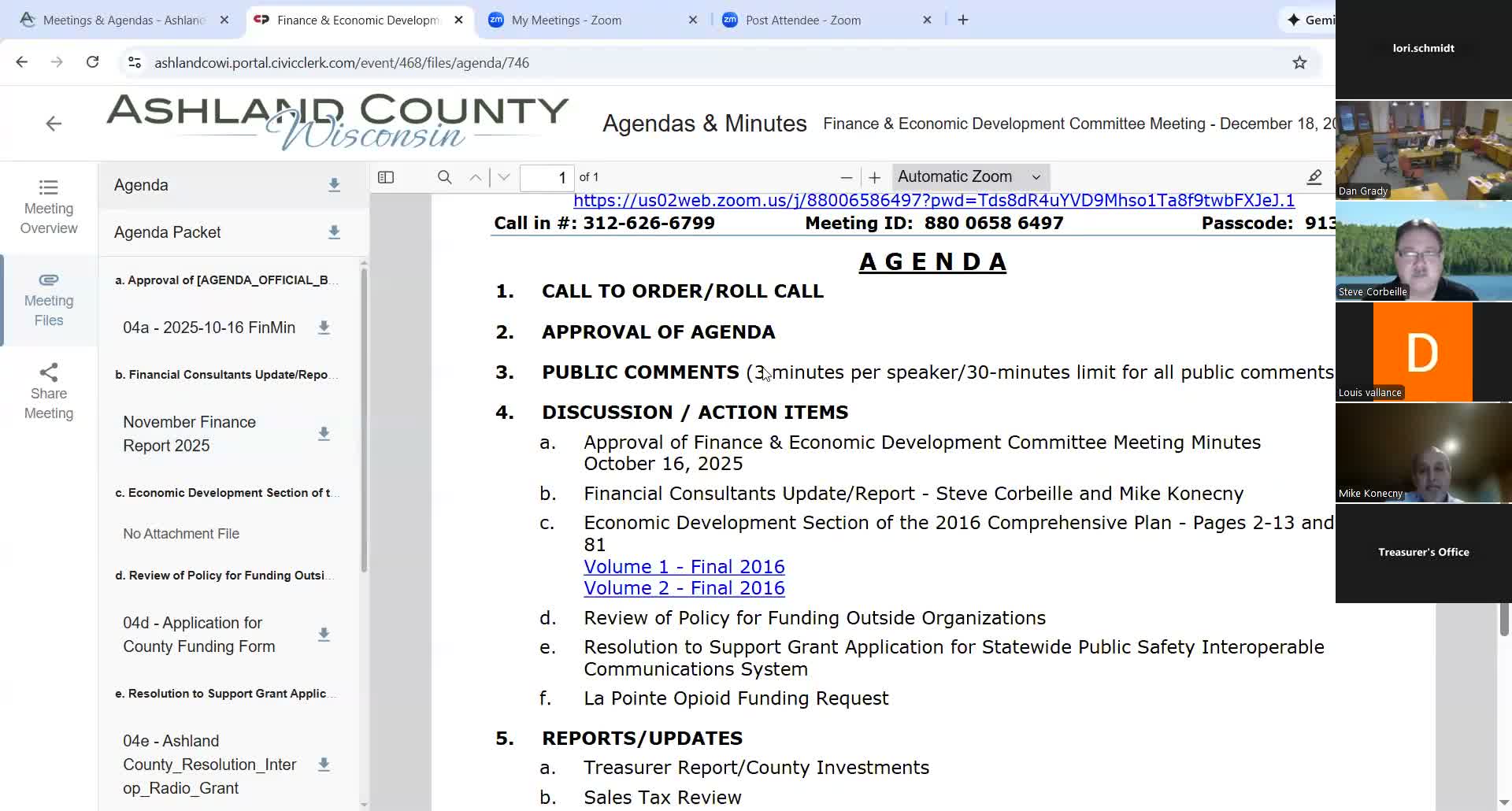
Summary
Committee members reviewing the 2016 comprehensive plan highlighted construction as a major local employer and discussed creating a business/industrial park near Ashland to support trades, housing infill and farmland preservation; further work and outreach were set for future meetings.
At a December finance and economic development committee meeting, members said the county's 2016 comprehensive‑plan economic chapter points to construction as a leading source of earnings and a strategic target for new local initiatives. Pat Kinney, speaking during the review, said construction "jumps out at me as an area that we would have some support for," citing tabulated figures in the plan and local labor demand.
Committee members noted specific data from the plan showing hundreds of construction jobs and significant earnings in the sector (the table cited roughly $37,003.31 in thousands in construction earnings on the document reviewed), and discussed commuting patterns that show a net inbound worker flow into Ashland County. Kinney summarized that "we don't lack for jobs in Ashland County. ... We just don't have enough good jobs," arguing that stronger construction capacity could help produce housing and moderate costs.
Several members endorsed a concept advanced earlier by Blake Ellison: a business or industrial park located near the city of Ashland to concentrate construction‑related firms and reduce the pressure to build on outlying farmland. "If more of those businesses could locate in or close to Ashland, we might get more infill, which then helps with the farmland preservation," Kinney said. Blake noted recent large housing and construction projects near the highway and said tax incentives and targeted grants have driven recent development.
Speakers also discussed workforce development and the role of training programs. Committee members pointed to high‑school trade certificates, employer training plans and a recent developer‑led 150‑unit apartment project as examples of how housing and employer incentives can reinforce one another. Members flagged potential constraints — local zoning authority, city home‑rule over most urban parcels, and the county's limited leverage in municipal zoning decisions — but said the comp‑plan update should record options and goals to guide future work.
The committee asked Gary, who is leading the comp‑plan chapter update, to return with a focused draft and recommended continuing the topic at future finance meetings, with an anticipated follow‑up in March and more substantive proposals around April.