
Centerville board approves OFCC study; staff to pursue enrollment, facility assessments
Get AI-powered insights, summaries, and transcripts
Subscribe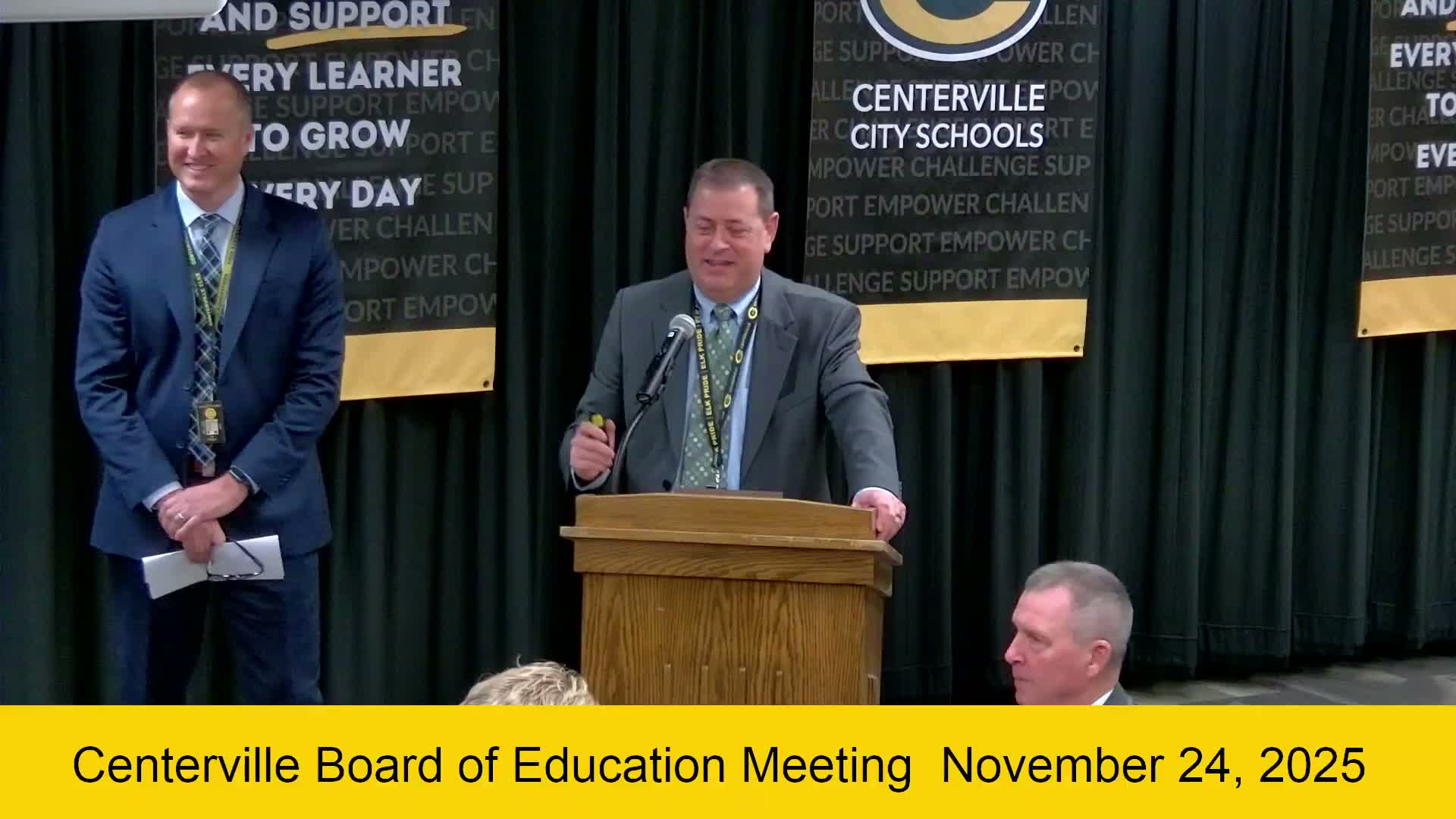
Summary
The board approved a nonbinding resolution to pursue an OFCC expedited local partnership assessment and received a facilities committee update that highlighted aging buildings, accessibility issues and potential consolidation options.
Centerville City Schools trustees approved a resolution of intent to pursue an Ohio Facilities Construction Commission (OFCC) Expedited Local Partnership Program assessment and heard a detailed facilities update during the meeting.
Business office staff described the district facilities review and the OFCC process, including an enrollment study and a facility assessment. Staff told trustees the OFCC program cited a typical funding split under the program of roughly 18% state and 82% local and that the district is currently listed at about 496 of 609 on the OFCC index; staff emphasized that partnering would require a resolution but would not obligate the district to begin construction.
The facilities presentation summarized the district’s 13 learning sites, their ages and capacities. Board members and staff highlighted accessibility concerns at the oldest school, Magsig, and high enrollments at Watts Middle School (about 801 students) and Central High School (about 2,566 students). Staff said community feedback from an “Elk Walk” stakeholder tour (38 of 48 attendees provided feedback) identified restroom upgrades and classroom space as common priorities.
Why it matters: Staff framed the OFCC assessment as an information-gathering step that would provide cost estimates, enrollment projections and recommendations on renovation versus replacement. “We really want to get the community involved,” a board presenter said, urging additional public engagement before any construction decisions.
Board action: The board passed a resolution of intent to participate in the OFCC Expedited Local Partnership Program on a roll-call vote. Staff said an enrollment and facility assessment could be completed in about four months and that partnering would require community conversations about local funding and timing.