Get Full Government Meeting Transcripts, Videos, & Alerts Forever!
Get email alerts on the Farmland Preservation topic
No spam. Unsubscribe anytime.
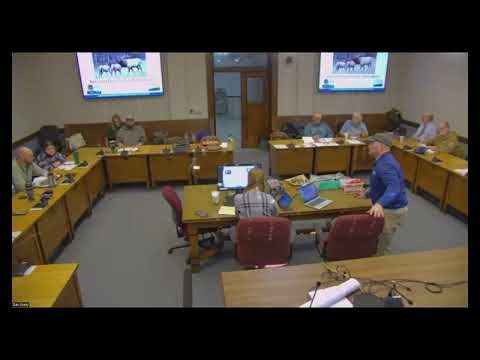
Ashland County updates farmland preservation plan; committee urged to press state for northern adjustments
Summary
Mary Jo Gingras told the Land Conservation Committee the county’s 10-year farmland preservation plan update is nearly complete, preserves eligibility for DATCP funding and a $10-per-acre tax credit for qualifying landowners, and will be forwarded to the Department of Agriculture, Trade and Consumer Protection for certification before county board review in January.
Mary Jo Gingras of the Ashland County Land Conservation Department presented an update on the county’s 10-year farmland preservation plan and answered committee questions about its value for local agriculture.
Gingras said Wisconsin law (chapter 91) requires each county to have a farmland preservation plan and described Ashland County’s agricultural profile: 209 farms and roughly 68,000 acres of agricultural land (2022 U.S. Department of Agriculture census). The plan is required to state county policy on farmland preservation, specify actions the county will take to preserve farmland and identify farmland preservation areas.
The plan preserves eligibility for program benefits that include a $10-per-acre tax credit for qualifying landowners and about $30,000 a year in nutrient-management funds that support the county agricultural technician, Gingras said. She said the committee’s final plan development meeting is scheduled for Dec. 16; after committee approval the draft will be forwarded to the Department of Agriculture, Trade and Consumer Protection (DATCP) for certification and then to the county board in January.
Committee members debated the local usefulness of the state program. County board member George asked whether the state framework remains suited to northern Wisconsin’s small-scale and often rented farms and whether the law’s eligibility and compliance requirements should be updated. “If it was not a state law ... Would you consider it worth your time and energy to be doing this plan?” he asked. Gingras responded that the plan is a statutory requirement that also preserves funding sources and grant eligibility; other members said the plan can be used to request state changes and to tailor local policies to northern needs.
The committee discussed next steps for the plan and related grant opportunities. Gingras noted a consultant (Northwest Regional Planning Commission) helped prepare the draft and that the county received a state grant covering 50% of the consultant fee. She also said the farmland preservation plan supports grant applications — the county intends to submit applications to state and national funding programs tied to the plan’s objectives.
Next steps: county committee will finalize its draft Dec. 16, forward it to DATCP for certification and present the certified plan to the county board in January. Committee members asked staff to capture suggested state-law changes in the plan draft and to consider resolutions the county board could send to Madison.