
Volunteers serving 160 North Brookfield households ask board to pursue variance so cold-food distributions can resume
Get AI-powered insights, summaries, and transcripts
Subscribe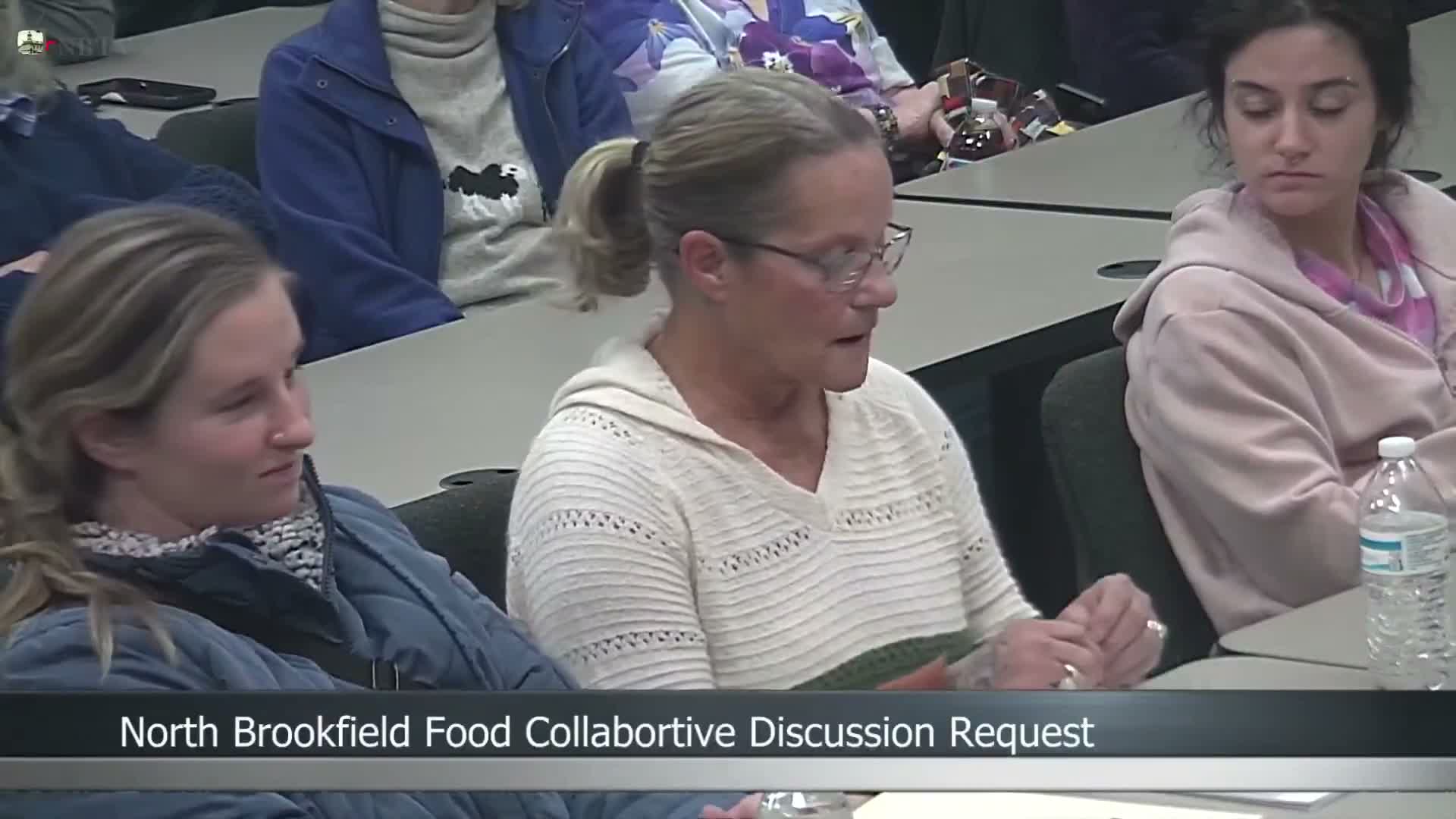
Summary
At the Nov. 19 Board of Health meeting volunteers from the North Brookfield Community Food Collaborative described a cold-storage distribution model serving about 160 families and asked the board to pursue a variance or appropriate permit so temperature-sensitive donated foods can be distributed without interruption.
Karen Farrington, who identified herself as the representative of the North Brookfield Community Food Collaborative, told the Board of Health on Nov. 19 that her volunteer operation distributes donated, prepackaged frozen and refrigerated foods to about 160 families each week and functions as a cold-storage distribution hub rather than a commercial kitchen. “We operate a cold storage distribution logistic hub, not a commercial kitchen,” Farrington said, describing same-day pickups and insulated transport.
The collaborative has used donated storage in a residence and relied on partners including Whole Foods, Hannaford and local farms. Farrington said the town’s recent enforcement response stopped distributions to families, and she urged the board to “think outside the box” so food support can continue while meeting safety requirements.
Board members explained they did not intend to close the collaborative but said state law and the state food code restrict residential permits from handling time-and-temperature-controlled-for-safety (TCS) foods — items that require refrigeration to prevent bacterial growth. “If you are an organization serving, handling, offering, selling food, you need a food permit,” an unidentified Board of Health member said, and added, “We have not issued a cease and desist.” The board noted local boards issue permits but must follow state food-code standards.
During public comment, residents and a regional food-systems consultant urged the board to find a compliant pathway rather than stop the service. The consultant said similar distribution setups have been inspected and approved elsewhere in Massachusetts and asked the board to help craft a local solution. Several residents emphasized that church food pantries have limited hours and accessibility barriers that leave seniors and people with disabilities without reliable access to fresh produce.
Late in the discussion, the board reported the Department of Public Health regional office indicated a variance process might be available. Board members offered to work with Farrington and the regional director to draft a variance proposal and review required safety measures. Farrington agreed to prepare a proposal and meet with board staff, and the board said it would coordinate with the regional DPH and its contracted inspector to identify what the variance would need to address.
The meeting record does not show a formal vote on the collaborative’s status. The board and several residents agreed on next steps: Farrington will submit a proposal describing operations and safety controls; the board will pursue guidance from the regional DPH; and the parties will meet to refine an application for a variance or another permitting path.
The Board of Health said it will follow up after consulting with the regional DPH; Farrington and volunteers said they would keep helping their clients in the meantime by focusing on non-TCS items until permitting is resolved.