Get Full Government Meeting Transcripts, Videos, & Alerts Forever!
Get email alerts on the National Defense topic
No spam. Unsubscribe anytime.
Presenter outlines priorities in FY2026 NDAA: acquisition reform, troops' pay and Pacific deterrence
Summary
A presenter to the House Armed Services Committee described the final FY2026 National Defense Authorization Act as a bipartisan package that prioritizes fixing the Pentagon's acquisition system, authorizes billions for construction, shipbuilding, air systems and research, and supports a 3.8% pay raise for service members.
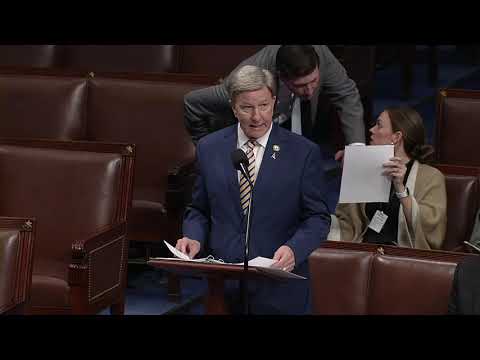
At a House Armed Services Committee session, an unidentified presenter introduced the final National Defense Authorization Act for fiscal year 2026 and described it as a bipartisan, bicameral product that focuses on acquisition reform and force readiness. "I'm proud to present the final National Defense Authorization Act of fiscal year 2026," the presenter said.
The presenter said the committee concentrated efforts on "fixing the Pentagon's broken acquisition process," arguing current procurement rules are "failing our warfighters." The statement framed the bill's reforms as measures to "put commercial solutions first, eliminate regulatory burdens, and end bureaucratic inertia" so the Defense Department can deliver capabilities "to the warfighter at the speed and scale that we need." The presenter described those changes as central to building a "ready, capable, and lethal fighting force."
On personnel and quality-of-life measures, the presenter said the FY2026 NDAA "continues to make improvements in the quality of life of all of our service members" and "supports the Trump administration's 3.8% pay raise for all service members." The bill, the presenter said, also authorizes "nearly $3 billion" for construction projects including barracks, family housing, dining facilities, medical facilities, childcare centers and schools, and it "improves the service member access to mental health services."
On strategic posture, the presenter framed the bill as a response to an evolving threat environment, saying "the threats to our nation [are] more challenging than at any point in the last 40 years" and that the legislation "counters the threat from China and ensures mission success in the Indo-Pacific." The presenter said the bill "extends the Pacific defense initiative, enhances the U.S. posture in the region, and improves our ability to conduct military operations in the Pacific," and added that it "bolsters Taiwan's defenses and helps build the capacity of our allies in the region."
The presenter also cited major procurement and research authorizations included in the measure: "over $26 billion in shipbuilding for additional submarines and surface vessels," "$38 billion to ensure air dominance with new-generation fighter jets," "$25 billion to restore America's arsenal of munitions," and "$145 billion to research and develop innovative new technologies" intended for future battlefields.
The session closed with the presenter reiterating that the bill is a "strong bipartisan bill that delivers for our warfighters and deters our adversaries" and will "fundamentally reform the defense acquisition enterprise" while continuing historic improvements in service members' quality of life. The transcript does not record a committee vote or any formal amendments during this presentation; no formal motion or recorded vote is included in the session record provided.
Next steps were not specified in the provided transcript excerpt.