
Board of Ethical Conduct Dismisses Complaint Alleging Doxing and Interference by Council Member Roland Horton
Get AI-powered insights, summaries, and transcripts
Subscribe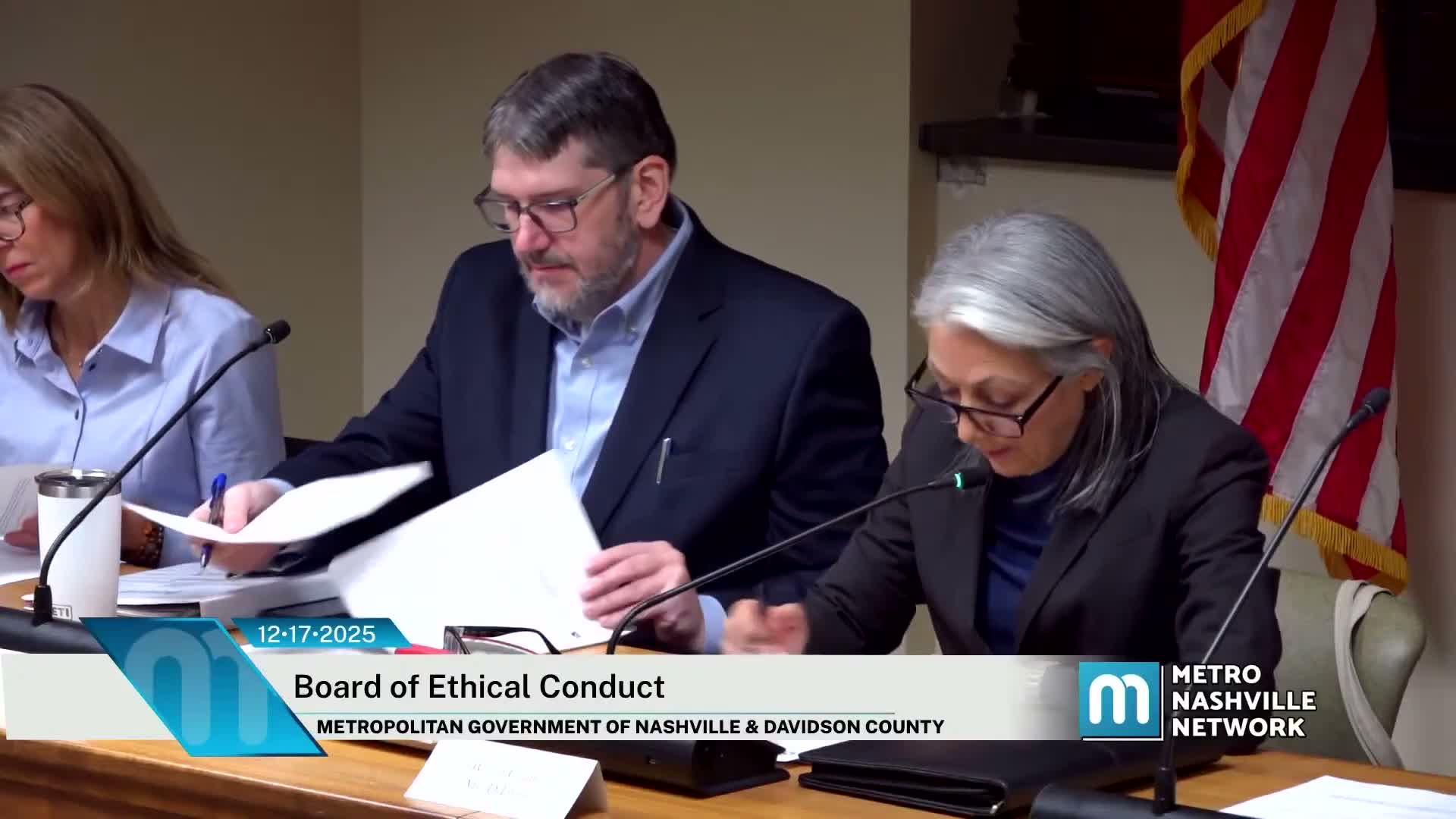
Summary
After reviewing a Department of Law memorandum and exhibits, the Board of Ethical Conduct voted 5-0 to dismiss a complaint that alleged Council Member Roland Horton or associates posted a resident—s contact information, contacted police at petition sites, and interfered with petitioners; the board concluded the pleaded facts did not meet the legal elements required for an ethics violation or the cited criminal statutes.
The Board of Ethical Conduct concluded a complaint accusing Council Member Roland Horton of posting a resident—s personal information, directing police to petition sites and interfering with petition gathering did not, as pleaded, meet the legal standards for an ethics violation or the state crimes cited. The board voted 5-0 to dismiss the complaint and said it would issue a written order reflecting that decision.
The board opened the matter by reading a Department of Law memorandum that summarized three categories of allegations: (1) an Instagram post and a media statement identifying a resident who spoke against zoning, (2) contacting police at several parks where recall petitioners were gathering signatures, and (3) an incident at a business ("Tin Wings") in which a campaign volunteer allegedly told petitioners they could not remain despite the owner—s permission, followed by text messages and missed calls between the council member and the business owner. The law memo concluded that, on the facts as alleged, the conduct did not satisfy the elements of the Metro Code provisions or the Tennessee criminal statutes read into the board—s standards.
"The allegations concerning the disclosure of Ms. Magley's name and address . . . if true, would not give rise to a violation of section 2.222 0.02 l of the standards of conduct," the law department told the board, adding that the Instagram post contained no threats and was deleted after the resident raised safety concerns. The memo also analyzed state statutes (including Tennessee code sections cited in the memo) and advised the board that the posted material and the communications described lacked the elements necessary for criminal harassment or official-oppression offenses under state law.
Board members repeatedly said they found parts of the behavior troubling. As Chair Adiani put it during discussion, "I find it concerning behavior . . . but I don't see the elements of the standards of conduct or state law that would justify going to a hearing." Several members noted that even assuming the complaint—s allegations were true for purposes of this preliminary review, the record the complainants provided (exhibits showing an August 18 Instagram post, an October 6 media statement, text exchanges and two missed calls) did not demonstrate the frequency, threat, or misuse of confidential Metro records necessary to meet the cited legal tests.
Members also discussed process limits: the board is confined to the specific standards of conduct set in its code and does not have a general executive-branch—s employee ethics standard that would apply to elected officials. The board—s procedures (adopted in 2023) restrict consideration at this stage to the complaint and the Department of Law memorandum; the board declined to consider a supplemental memo submitted separately by a third party.
Following discussion, a board member moved to dismiss the complaint "in its entirety because the allegations, as alleged, do not constitute a violation of our standards of ethical conduct or state law." The motion was seconded and passed on a roll-call vote, 5-0. The board said it would file a written order to that effect, likely after the holidays in early January. The meeting then moved on to scheduling and adjourned.
The board—s action ends this stage of the process; dismissal means the board will not hold a hearing on the complaint unless new, different allegations or facts are filed that would meet the elements of a violation. The board did not issue sanctions and did not take evidence at this meeting.