
Westerville treasurer warns proposed Ohio property-tax bills could upend levy revenues and local control
Get AI-powered insights, summaries, and transcripts
Subscribe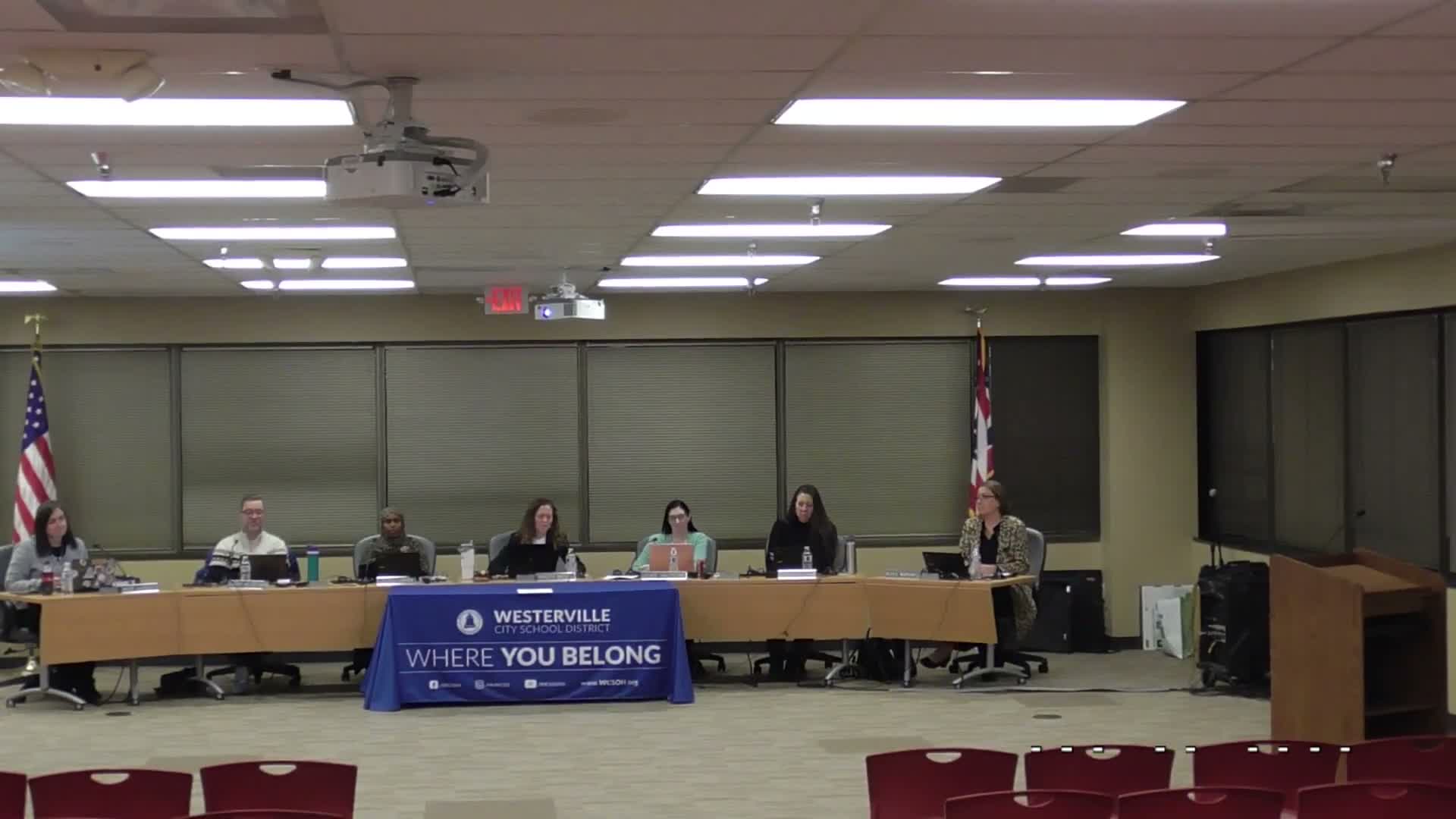
Summary
Treasurer Nicole Marshall told the Westerville City Schools board that a package of bills before Gov. DeWine would change rollback credits, cap growth for some millages and could give county budget commissions authority to reduce older voted levies, a change she said could be challenged in court.
Westerville City Schools Treasurer Nicole Marshall laid out a detailed legislative alert at the board’s Nov. 24 meeting, warning that several property-tax measures now on Gov. Mike DeWine’s desk could reshape how school levies and local tax credits work in Ohio.
Marshall said the bills under consideration include House Bill 129 (adding fixed-sum levy types to the 20-mill floor calculation), HB186 (caps on growth for 20-mill-floor districts and changes to rollback credits), HB335 (similar caps applied to inside millage), HB309 (which would give county budget commissions authority to reduce older voted levies they deem excessive) and HB124 (changes to property-assessment review processes). She urged community outreach and said she planned to ask the governor to veto HB309.
"This gives county budget commissions the implicit authority to override voted levies," Marshall said of HB309, adding that the district should maintain clear, board-adopted plans so it can explain long-term commitments and contracts if required to make a case before a budget commission.
Marshall told the board HB186 includes retroactive provisions to tax year 2023 that could produce credits or adjustments for some taxpayers in 20-mill-floor districts; she emphasized Westerville is not a 20-mill-floor district and therefore would not receive the retroactive credits but that roughly 400 districts would be affected.
The treasurer outlined technical elements of the bills: HB186 would phase down a 10% nonbusiness rollback over four years while increasing owner-occupancy credits (from roughly 12.5% to about 15.3% over the phase-in), and HB335 would cap inflationary growth for inside millage (the constitutionally set 10 mills shared among overlapping jurisdictions). She noted that Westerville’s portion of the inside millage is roughly 3.8 mills of an overall ~38-mill rate.
Marshall also presented third-party context: a slide and linked blog post by policy expert Steven Dyer showing that inflation-adjusted K–12 state spending is at a low point, and a video excerpt of legislative debate (cited in the presentation) describing the bills as complex with significant trade-offs for local governments.
Board members pressed for clarity on retroactivity and county-by-county effects. Marshall said county reappraisal cycles differ and that shifting authority or formulas could create uneven tax outcomes for identical properties that lie in different counties. She also flagged administrative and software challenges county treasurers reported when discussing implementation timelines.
Marshall urged residents to contact the governor and legislators quickly because the bills had already reached the executive branch.
What’s next: These items were presented as an informational legislative update. The administration encouraged public outreach to Gov. DeWine and the district’s state legislators; no formal board action on the bills was taken at the meeting.