
Kenosha Unified projects potential $1.7M–$3.0M net revenue but flags $17M structural gap
Get AI-powered insights, summaries, and transcripts
Subscribe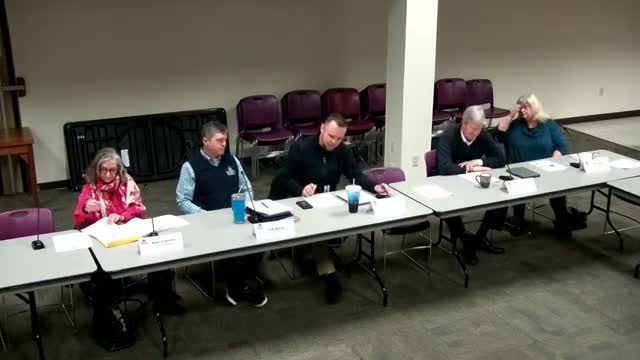
Summary
District finance staff told the Audit, Budget and Finance Committee that state funding uncertainties — especially special-education reimbursements — and enrollment declines create a budget gap that could leave the district $15–$17 million short unless expenses are cut, reserves used, or voters approve a referendum.
Kenosha Unified School District finance staff told the Audit, Budget and Finance Committee on Nov. 1 that preliminary modeling for the 2026–27 budget shows a narrow range of potential net revenue but a much larger underlying shortfall driven by structural expense growth and uncertain state reimbursements.
"When I run that simulation, I'm coming up with about $2,587,000 more that we can expect," said Tarek, the district finance presenter, describing a projection that includes a $325 per-pupil increase built into the state revenue-limit formula and a projected decline of roughly 500 full‑time‑equivalent students. The district estimated per‑pupil revenue near $12,000 if assumptions hold.
Why it matters: the district is already carrying a structural deficit from its adopted 2025–26 budget and faces both rising costs and funding volatility from state and federal sources. Tarek warned that a shift in state special‑education reimbursement could materially change the revenue picture. "We just received notice from [the Department of Public Instruction] last week that they are now projecting our payments at 35%." Under the district's more conservative internal assumption, net revenue could be about $1.7 million; a best‑case scenario would be roughly $3.0 million.
The district outlined key expense pressures that drive the gap: about $18.8 million in added expense items modeled across categories including staff salary schedule movements, health‑insurance increases, curriculum requests and capitalized operating costs. Major line items called out by staff included a $1.5 million curriculum-adoption request, a $1.3 million instructional-technology refresh, and an early estimate of a $1.4 million increase in the student-transportation contract that covers regular and special‑education routes.
Tarek presented a simplified cash‑flow view showing how projected revenues and expenditures interact and emphasized cash‑on‑hand needs. He summarized the structural problem bluntly: "Dollars $3,000,000 of revenue, dollars $18,800,000 of expenses means you have a $15,800,000 shortfall." Committee members pressed for clarifications on how SPED claims are audited and how state allocations are determined; staff explained that districts submit eligible reimbursable costs to DPI and that DPI divides a fixed budget pot among districts, producing the percentage‑based reimbursement.
Options discussed: staff said the district can reduce expenses, identify new revenue streams, or ask voters for permission to exceed the state revenue limit via referendum. Tarek noted the narrowness of local control: the revenue‑limit formula sets the district's cap and the only local mechanism to exceed it is a public referendum. Board members and committee participants asked for follow‑up scenarios and more granular school‑level impacts; staff said further analyses would be prepared for upcoming board briefings.
Next steps: finance staff will refine assumptions as DPI finalizes figures (typically available close to the new fiscal year) and will return to committees and the full board with more detailed options, including potential program‑level reductions, use of reserves, and the structure and timing of any referendum proposal.