
Fair Board chair cleared on ticket and disclosure counts; board warns him for appearance of undue influence
Get AI-powered insights, summaries, and transcripts
Subscribe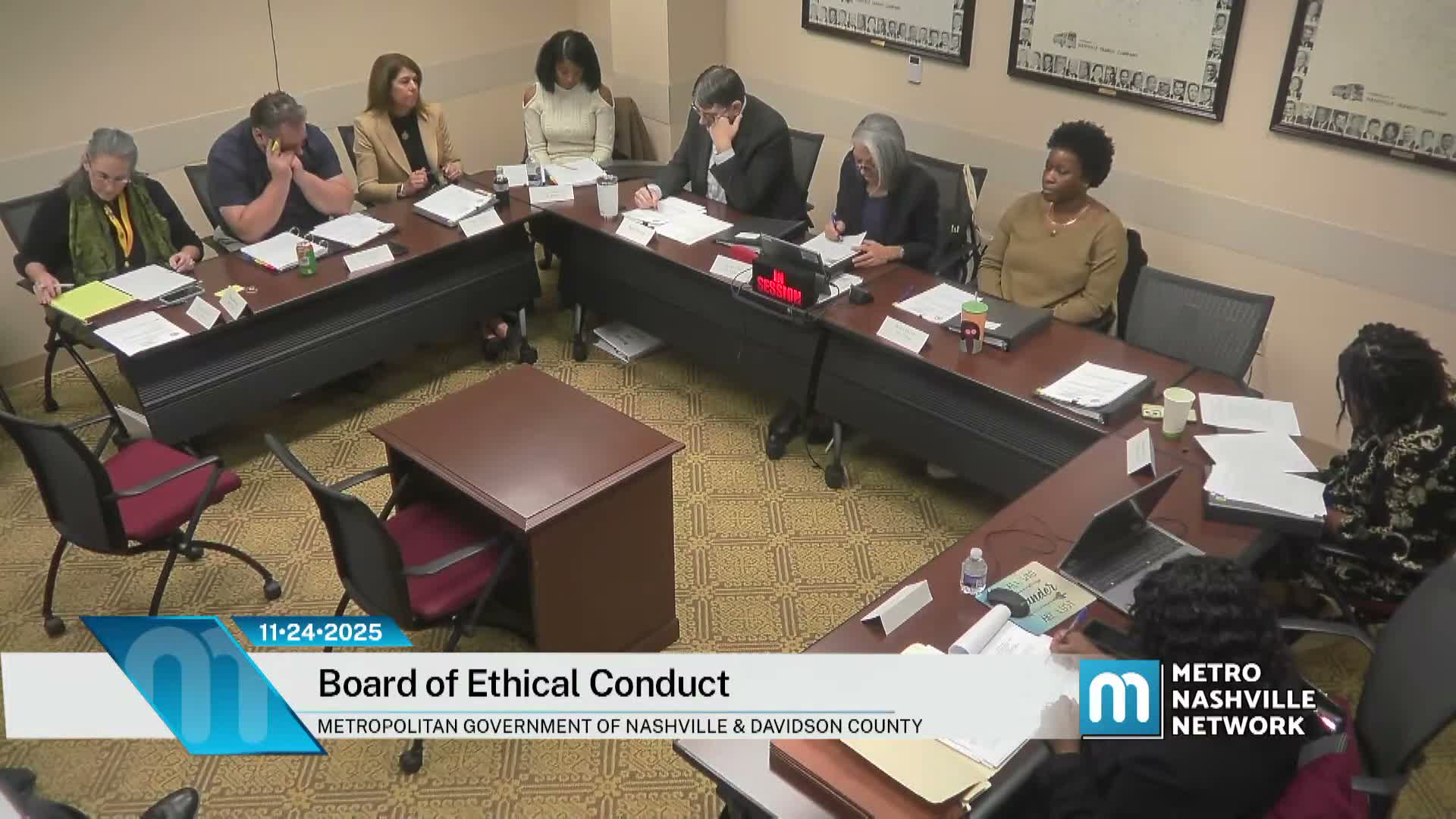
Summary
After a full evidentiary hearing, the Board of Ethical Conduct found insufficient evidence that Fair Board Chair Jasper Hendricks accepted a ticket or disclosed confidential contract terms, but concluded his conduct created a reasonable appearance of undue influence and ordered a written warning plus ethics training and a prescriptive disclosure of racing ties.
Chair Jasper Hendricks, who leads the Metro Fair Board, was the subject of a contested ethics hearing that ended this week with mixed findings: the Board of Ethical Conduct concluded there was not sufficient evidence that Hendricks received a prohibited gift or that he disclosed confidential contract terms, but the panel found by a 4–0–1 vote that his actions created a reasonable appearance that outside interests could improperly influence his official duties.
The hearing, which the board opened as "Complaint: John Spraggins v. Fair Board Chair Jasper Hendricks," centered on three allegations: that Hendricks accepted free admission to a private NASCAR black‑tie gala valued over the board's $100 threshold; that he disclosed confidential information about a proposed racetrack development; and that his contacts with a lobbyist and public comments gave the appearance of undue influence.
The complainants, represented by attorney Rita Roberts Turner, framed the case as "about accountability," asking the board to answer four questions including whether Hendricks accepted a gala pass, whether the pass exceeded $100 in value, whether he disclosed confidential negotiation details, and whether he coordinated media messaging with prospective vendors. "This is not an effort to demonize Chair Hendricks," Turner said in opening. "This is an effort to ensure community leaders, even volunteers, uphold the integrity of their positions."
Hendricks denied the allegations. In an extended opening and sworn testimony he said the gala access stemmed from a preexisting relationship with a racing team (23XI Racing) and that he had not shared confidential terms: "This complaint is not about ethics," he told the board. He described long involvement with racing organizations, community work at the fairgrounds and said he had been "blindsided" by media inquiries about a new deal.
The hearing record includes testimony from neighborhood witnesses who said they first learned about proposed changes to the fairgrounds on the news rather than through direct notice, and evidence from a public‑records request that produced emails and text messages between Hendricks and a lobbyist identified in the record as Matthew Cooney. Complainants pointed to exchanges in which the chair was asked about media inquiries and to a Fox 17 posting of a two‑page term sheet as steps that raised concerns about back‑room messaging.
On the first two counts — the ticket/access question and disclosure of confidential contract terms — the board voted 4–1 that the evidence did not meet the preponderance threshold to find a violation. Board members who voted that way cited Hendricks' long‑standing and public relationships with racing organizations and said the record did not prove the access was provided because of his board role or that he was the source of the circulated term sheet.
But on the third issue — whether Hendricks' conduct gave a reasonable basis for the impression that outside parties could improperly influence him — the board voted 4–0–1 (four yes votes, one abstention) to find a violation under the code's standard prohibiting conduct that creates such an impression. In announcing that finding the chair summarized: board members said the totality of Hendricks' attendance at the gala, his public statements to reporters, and the communications revealed by the public‑records request reasonably gave the appearance that he might be advantaging outside interests.
The board stopped short of recommending removal or forced recusal. Instead it voted unanimously to issue a written warning and to require remedial steps. The board authorized its chair to work with legal staff to draft a formal written warning to the Vice Mayor (with a copy to the fairgrounds' executive director) that will: briefly describe the board's finding; direct Hendricks to review Metro ethics training materials; and require him to prepare and distribute a written disclosure of all current and prior affiliations, contacts, or paid/voluntary relationships with NASCAR, track owners/operators, and race teams. The disclosure must be provided to the fairgrounds director and to fellow Fair Board members no later than 60 days from the hearing—or sooner if the matter returns to the board for a vote.
The board's action also included scheduling details: staff will draft the warning in consultation with legal; the board expects to finalize and post the document promptly following that drafting. The panel also set an initial hearing date on a separate complaint for Dec. 17 at 9 a.m.
What the record shows
- Complainants relied on a public‑records request that turned up emails and text messages the complainants say show coordination between the chair and a lobbyist about media messaging. The complainants introduced a Fox 17 article and a two‑page "term sheet" excerpt into the record as documentary evidence.
- Hendricks testified he attended the November 30, 2023 gala as a guest of 23XI Racing and said he was present for roughly an hour, that he did not consume food or beverage while there, and that his access was based on longstanding ties to racing organizations rather than any pending fairgrounds vote.
- Witnesses from the neighborhood testified they did not receive contemporaneous notice of the fairgrounds proposals and learned of the project through the media; they described flyers and election‑period mailings related to the proposal in 2023.
What comes next
The board will circulate the final written warning after chair and legal staff complete the draft; the warning and the disclosure will be posted to the board record. The complaint's formal findings and the sanction will be included in the board's written order. The next initial hearing on a different complaint was set for Dec. 17 at 9 a.m.
The board's action represents a middle path: it rejected the most serious, document‑specific allegations for lack of proof but concluded the chair's mix of public statements, attendance and private communications created an appearance of partiality that warranted formal reprimand and remedial measures. The written warning is intended to put those remedial steps on the record and to provide transparency for future votes related to the fairgrounds.
Quotes from the hearing
"This is not an effort to demonize Chair Hendrix... but it is an effort to ensure that community leaders... uphold the integrity of their positions," complainants' counsel Rita Roberts Turner told the board in opening.
"This complaint is not about ethics," Jasper Hendricks said in opening. "I sit here today having done nothing wrong."
Board action
The board (vote tallies as recorded in open session): - Attendance/access (§2.222(e)/(s)): no violation, 4–1 (in favor of no violation). - Disclosure of confidential information (§2.222(l)): no violation, 4–1 (in favor of no violation). - Appearance of undue influence (§2.222(k)): violation found, 4–0–1 (four yes, one abstention). The board ordered a written warning and remedial steps including ethics training and a public disclosure of Hendricks' racing‑related affiliations.
(Reporting note: quotations and specific factual assertions above come directly from the hearing transcript and sworn testimony.)