Get Full Government Meeting Transcripts, Videos, & Alerts Forever!
Get email alerts on the Waste And Recycling topic
No spam. Unsubscribe anytime.
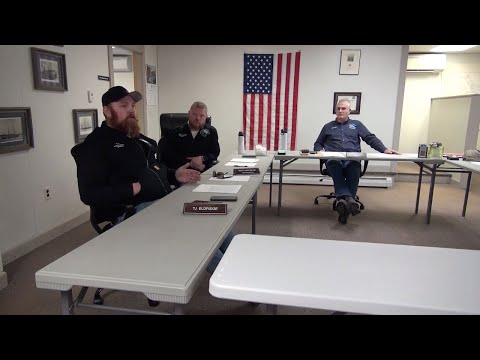
Residents, transfer-station manager debate recycling options and hazardous-waste day in Ossipee Town
Summary
Residents urged the Select Board to restore or revise recycling and hazardous-waste services at the town transfer station, arguing better collection and fee changes could save money; transfer‑station staff warned mixed streams and contamination limit what can be sold for recycling.
Brad Marion, who said he and his wife serve on the Conservation Commission, urged the Select Board to reconsider how the town handles recycling at the transfer station and to pursue programs that reduce waste before it reaches the landfill. “I looked at the study that Mister Sawyer and Mister Eldridge did in October 2020,” Marion said, and noted plastics and paper often end up in the municipal waste stream despite collection efforts.
TJ Eldridge, who manages the transfer station, told the board that aluminum remains the only consistently profitable recycling stream. “The aluminum is where the money is,” he said, explaining mixed paper and plastics require additional storage and are easily contaminated when wet. Eldridge said the town lacks the storage and chain‑of‑custody guarantees needed to reliably sell mixed streams and that increased containerization and bailer costs would raise operating expenses.
Residents and board members discussed practical steps Marion proposed: increasing construction-waste scale fees, targeting high‑value plastics (clear PET bottles) for collection, and expanding public education and signage. Marion suggested a modest fee increase on construction debris could generate roughly $20,000 annually; the board asked staff to refine that estimate.
Chris Elliott and others asked about hazardous-waste disposal. Board members recalled the town once hosted an annual hazardous‑waste day at a cost of about $5,000 plus program fees and overtime; staff said regional coordination through Lakes Region Planning previously failed to secure cost sharing among neighboring towns. Selectmen encouraged renewed discussion with the regional planning commission and neighboring towns about a rotating hazardous‑waste collection event.
The board thanked speakers for the input and asked transfer‑station staff to return with cost estimates for recommended changes (storage/covering containers, adjusted scale fees and potential revenue) and options for regional hazardous‑waste collection.