
Des Moines County reviews redlined wind/solar ordinance as residents press for larger setbacks
Get AI-powered insights, summaries, and transcripts
Sign Up Free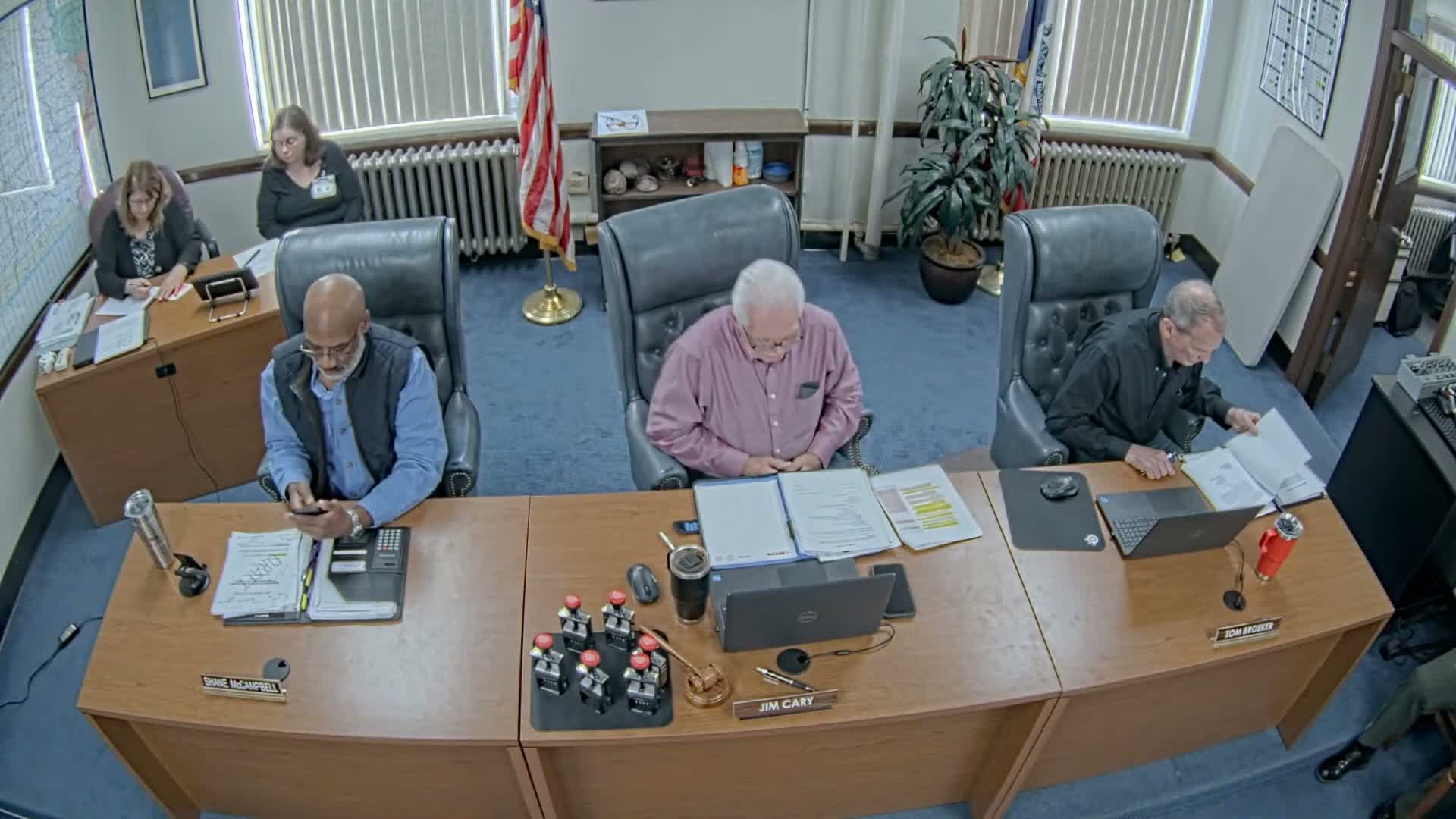
Summary
Residents pressed supervisors to increase setbacks for 650-foot turbines and to require safety data before permitting. County staff reviewed redline edits clarifying notice, department review timelines, and that preliminary consent would not guarantee final siting approval.
Des Moines County supervisors spent the bulk of a work session reviewing detailed edits to a draft wind, solar and battery ordinance while dozens of residents urged bigger setbacks and more safety data. County planning staff walked the board through redline changes meant to standardize language, tighten review timelines and clarify the county’s leverage over developers.
The board’s planner said the edits replace the term “landowner” with “property owner,” fix acronyms for solar versus wind sections, require the county administrator to notify nearby property owners at the developer’s cost, and set a 30-day response window for county departments to submit comments. The draft also shortens the deadline for developers to file a siting permit from two years to one year and adds an explicit statement that “granting consent to proceed shall not ensure final approval” of a siting permit.
Why it matters: the changes go to the heart of how the county evaluates large renewable-energy projects. Residents who oppose the current draft say the ordinance’s proposed setbacks would leave homes and farms dangerously close to giant turbines and would leave the county vulnerable to safety and nuisance problems.
“People keep asking when we can start renting the watercraft,” Ron Helling said at an earlier presentation; similarly in the renewable-energy exchange, residents emphasized local impacts. In public comment, Rose Fisher said the draft leaves Des Moines County among the least-protected counties: “While other counties made significant changes to their setbacks, you have increased ours by only 150 feet, leaving Des Moines County at the bottom.”
Several speakers referenced turbine manufacturer safety guidance and court cases used elsewhere to justify larger setbacks. Dawn Rolfs told the board she had not seen manufacturer documents from AES and said the ordinance’s schedule allows developers to withhold safety manuals until after final approval. “Preliminary approval of a wind ordinance would be negligent without having all the proper information,” Rolfs said.
Board discussion focused on permitting mechanics and legal risk. Some supervisors urged keeping a two-step review—an early preliminary review followed by final review—so the public and staff can provide meaningful input before developers invest heavily. Legal counsel and other supervisors debated whether a preliminary consent could be treated by a court as a vested property right, and staff inserted clarifying language that consent to proceed does not itself guarantee final approval.
Board Chair (unnamed) said the team will retain the preliminary-review step while adding the protective language. One supervisor said he was satisfied with the current setback amendment and the changes discussed; others said they remain uncomfortable with a 650-foot turbine height and want further discussion at the scheduled work session.
What’s next: staff will incorporate the agreed redline language into the ordinance and proceed with the planned public hearing/work-session schedule. If the board places additional restrictions, those will be reflected in a revised draft for further review.