
Eatonville district finance staff report cautious fiscal outlook despite stronger-than-expected revenues
Get AI-powered insights, summaries, and transcripts
Subscribe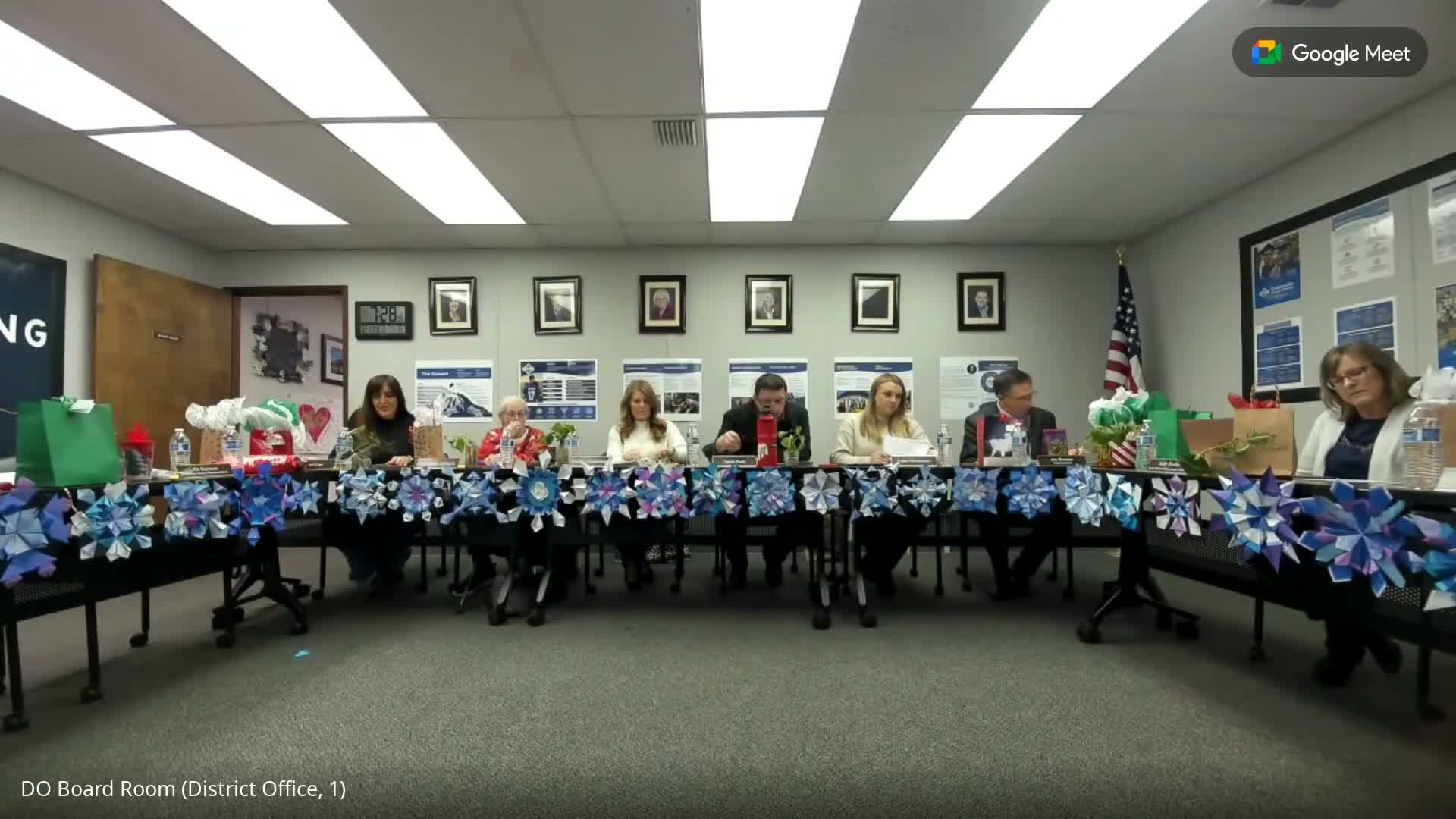
Summary
District finance staff reported revenues and expenditures roughly on track for the year but cautioned pending state policy and possible enrollment declines could jeopardize projected ending balances. The presentation covered levy revenue, restricted funds, transportation deficits, food services trends and capital-projects cashflow.
District finance staff presented a detailed fiscal-year review and monthly budget status at the board's December meeting, reporting that revenues and expenditures were near one-quarter of their annual targets but noting several risks for the remainder of the year.
The presenter said November revenues and expenditures were each about 24'—25% of the year-to-date total (SEG 411-415). While the district had originally anticipated drawing down $2 million to reach an ending fund balance of roughly $667,000, preliminary projections showed a higher balance—about $1.4 million—though the presenter cautioned that enrollment declines or new state taxes (discussed as "purchase services" taxation) could reverse that gain (SEG 416-436, SEG 433-436).
The board heard a breakdown of revenue sources: state funds composed the majority (~75%) of district revenue, local levy collections were reported at about $6 million last year, small timber tax receipts were noted, and a tutoring fund contributed more than $200,000 in designated revenue (SEG 752-763, SEG 732-736). The presenter emphasized that many of those additional revenues are restricted to specific purposes and cannot be redirected to cover general fund gaps (SEG 736-741).
On expenditures, the presenter said the adopted budget totaled $36,144,004.16 and the district ended the year within that budget by approximately $45,000 (SEG 896-905). The presenter also identified cashflow seasonality (low cash in June) and recent state-auditor-required corrections that reduced the prior-year ending fund balance by roughly $13,619, which reduced the current beginning balance (SEG 550-556, SEG 1236-1244).
Board members pressed for more granular program-level breakdowns (program-level revenues and costs, staffing and FTE impacts, and pool/athletics costs) to inform longer-term decisions; finance staff offered to provide F196 financial-report breakdowns and more detailed program cost analyses on request (SEG 1276-1341). Transportation was flagged as a persistent deficit area, driven by mileage and fuel taxes, and food services improved from a $300,000 loss to a $170,000 deficit in 2024-25, with plans to refine menus and operations to increase participation and revenue (SEG 1060-1071, SEG 1100-1160).
The presenter also reviewed capital projects, noting grant-funded items such as a boiler replacement and ongoing multi-year scheduling for large projects like the track-and-field/stadium; capital projects are accounted separately under state rules and often require local matching funds (SEG 1442-1466, SEG 1538-1543).
Board members directed staff to provide further breakdowns by program, staffing, and FTE impact to help evaluate potential options before any structural budget decisions are made.
The district will revisit these items in follow-up budget workshops and the year-end fiscal report.