Get Full Government Meeting Transcripts, Videos, & Alerts Forever!
Get email alerts on the Dual Credit topic
No spam. Unsubscribe anytime.
Board approves dual‑credit course updates and a USC Lancaster middle‑college pilot; members press on transportation and access
Summary
The board approved a Winthrop substitution (Business Statistics) and expanded dual‑credit course lists through York Tech and USC Lancaster, and approved a 30‑student USC Lancaster middle‑college pilot for fall 2026; board members pressed staff on transportation, lottery tuition eligibility and fee assistance.
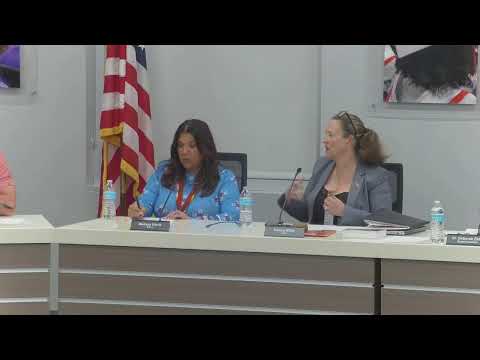
The Rock Hill School Board on Oct. 14 approved multiple dual‑credit course actions and a pilot middle‑college program with USC Lancaster intended to expand early college opportunities for district students.
Alicia Johnson, the district’s executive director for secondary education, described a program revision that substitutes Business Statistics (BSAN 205) for Econ 216 for students who already received AP Macroeconomics credit. "We are proposing that they be allowed to take the business statistics course in its place," Johnson said, explaining that the course will be commingled with Winthrop University students and count as transferable elective dual credit.
Johnson also presented an expanded list of courses available through York Technical College and USC Lancaster so students outside structured programs can access dual credit, and she outlined a proposed USC Lancaster middle‑college pilot that would admit 30 students in fall 2026. According to the presentation, tuition would be covered through the state lottery tuition assistance program for eligible students; families would still be responsible for course/lab fees and instructional materials.
Board members asked operational questions about the USC Lancaster pilot: the district will not provide transportation, staff said, and many students could rely on online course options but would lose in‑person campus access. Board members expressed concern that Lancaster’s 30–35 mile distance and variable student schedules could limit access for students without family transportation. The colleges said they can work on payment plans for instructional materials and that some colleges cover materials for enrolled students.
Despite access concerns, motions to approve the Winthrop substitution, the York Tech course additions and the USC Lancaster pilot were moved and carried during the meeting. Several board members urged staff to consider transportation options or targeted supports if the pilot proceeds to ensure equitable access.