Get Full Government Meeting Transcripts, Videos, & Alerts Forever!
Get email alerts on the Calendar topic
No spam. Unsubscribe anytime.
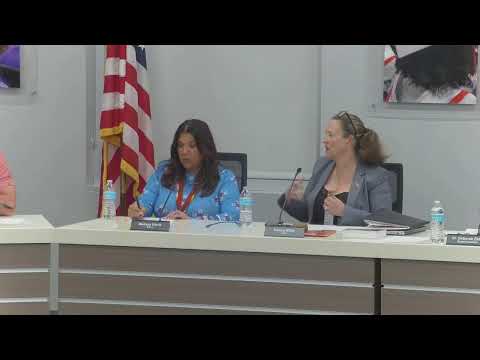
Rock Hill School Board hears parents' childcare concerns, asks staff to cost academic supports for proposed 2026–27 modified calendar
Summary
At an Oct. 14 public hearing and business meeting, the Rock Hill School Board reviewed a draft 2026–27 modified year‑round calendar, heard parental concerns about childcare and athletic conflicts, and asked staff to provide cost estimates for targeted academic supports before a vote.
The Rock Hill School Board on Oct. 14 revisited a proposed modified year‑round 2026–27 calendar and heard parents warn the schedule could impose new childcare and extracurricular burdens even as staff said the plan meets state day‑count requirements.
Alicia Johnson, executive director for secondary education, outlined the calendar’s structure and constraints, including 180 student instruction days, required professional development days and testing windows. She said the draft mirrors the district’s current modified schedule, with student semesters scheduled Aug. 3–Dec. 18 and Jan. 5–May 28, and teacher workdays beginning in late July. Johnson said the district has checked the day counts and “we believe we are where we need to be.”
Public commenters told the board that mid‑year intersession weeks can be expensive and logistically difficult for families. An unidentified parent said the staggered breaks “kinda puts a little strain on the parents” because families may pay both after‑school care and summer‑camp fees for the same week. Tiara Ramsey, a PTO volunteer, told the board that affordable options for middle‑school students were especially limited.
Board members praised the calendar’s potential to reduce summer learning loss and provide teacher planning time but repeatedly raised access and equity concerns. Several asked whether the district should provide or subsidize childcare or targeted instruction during intersessions so students who most need academic help do not lose ground. One board member urged the district to identify “critical areas in academics” and fund interventions such as small‑group enrichment or acceleration during the intersession weeks.
Superintendent’s staff agreed to cost out a range of options. Administrators noted a logistical challenge: the calendar approval schedule and the district’s budget calendar are months apart, so any funded program would require planning and may not be finalized at the same time as the calendar vote. The board did not take a final vote on the calendar at the Oct. 14 meeting; members were slated to revisit the item with additional information at the next business meeting.
The board also discussed athletic scheduling concerns and the need to coordinate with athletic directors to avoid conflicts during intersession weeks. The next procedural step is for staff to return cost estimates and supplemental models for academic supports alongside the calendar item.