Get Full Government Meeting Transcripts, Videos, & Alerts Forever!
Get email alerts on the Property Tax Valuations topic
No spam. Unsubscribe anytime.
Residents voice shock at steep assessments; county explains valuation and tax‑forfeiture rules
Summary
At Pine County’s Truth in Taxation meeting, residents reported individual tax jumps (one resident cited a 30.05% increase); county staff attributed most individual spikes to mass appraisal and new construction, and explained the tax‑forfeiture timeline and sale proceeds split under state law.
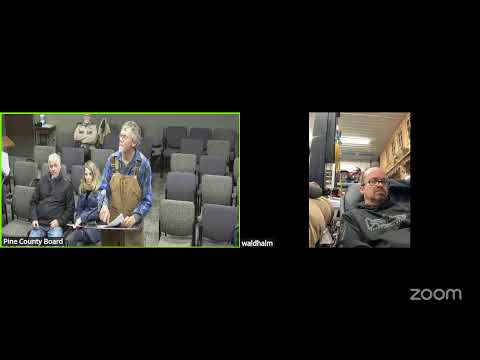
Several Pine County residents used the Truth in Taxation forum to press county staff about large, parcel‑level tax increases and to ask procedural questions about tax forfeiture. Karen Soderquist of Cross Lake told the board, “Our taxes went up 30.05% or from ’25 to ’26,” and asked what options exist when a family faces that change.
Kelly, a county staff presenter, responded that much of the countywide valuation shift is driven by market sales and the mass appraisal process. Kelly explained the assessor’s office performs a mass appraisal that relies on sales in the area and does not perform a full single‑parcel appraisal unless prompted; staff advised homeowners with parcel questions to speak with the assessor’s office. “I’m assuming most of your increase is valuation…that’s driven by sales,” Kelly said in response to Soderquist’s example.
During back-and‑forth, staff clarified practical steps homeowners can take: notify the assessor if structures are removed so values can be adjusted (the assessor’s office can be contacted by phone), and meet with assessor staff who were present after the meeting. One resident noted they had demolished an old structure and built a new house; county staff said the new construction is likely the cause of the higher valuation.
On tax‑forfeiture procedure, resident Lehi Sladek asked how the county moves from delinquency to forfeiture and sale. Kelly explained the process under current law: effectively a four‑year timeline from the tax year, with the forfeiture process beginning after taxes are delinquent for three years and the county required to sell forfeited property within six months under recent changes. Kelly explained that proceeds from a forfeited property sale are distributed under state rules (county 40%, schools 40%, township or city 20%) and that owners have opportunities to arrange payment plans before forfeiture and limited windows to reclaim proceeds after sale.
What residents asked for and what they were told: residents sought relief or clarity about sharp year‑over‑year bill increases; staff provided procedural guidance (assessor contact, documentation when structures are removed) and noted valuation increases tied to new construction and market sales rather than an administrative error. The county also reiterated that assessor staff are available for parcel‑specific reviews.
Next steps: staff invited residents to meet with the assessor’s office for parcel‑specific review and encouraged homeowners to report removed structures promptly so values can be adjusted.