Get Full Government Meeting Transcripts, Videos, & Alerts Forever!
Get email alerts on the Stormwater Detention Exemption topic
No spam. Unsubscribe anytime.
McHenry County panel reviews proposed stormwater exemption that ties small developments to existing‑vs‑proposed peak flows
Summary
The Technical Advisory Committee reviewed draft stormwater ordinance amendments that would let small projects avoid detention if new impervious area is limited (1 acre or up to 10%) and the increase in peak flow is ≤0.5 cubic feet per second; members asked staff to run critical‑duration examples and refine online tools and curve‑number tables.
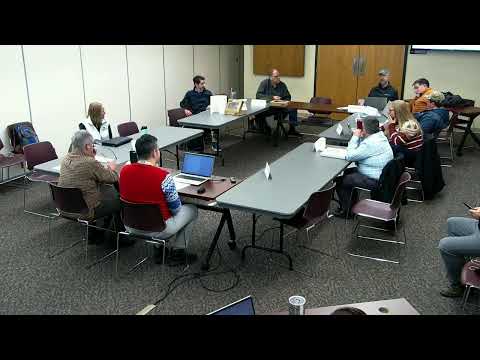
McHenry County’s Technical Advisory Committee spent the bulk of its Dec. 9 meeting examining proposed changes to the county’s stormwater ordinance that would create a structured exemption from detention for certain small or low‑impact developments.
Staff told the committee the central exemption would apply where a site adds up to 1 acre of new impervious surface and the increase in peak runoff — comparing proposed to existing conditions — is no greater than 0.5 cubic feet per second (CFS), provided the project maintains existing drainage patterns. A secondary path under consideration would allow up to a 10% increase in impervious area on a parcel if that same 0.5 CFS limit is met.
The proposal uses a curve‑number approach adopted from standard engineering practice (SCS/TR‑55) to quantify existing versus proposed runoff and to give credit for green infrastructure or native‑plant vegetation that reduces the site’s curve number. Staff said they modeled simple swales and pipe sizes (12, 18 and 24 inches) and used HydroCAD to demonstrate that the 0.5 CFS target corresponds to a negligible increase in downstream water‑surface elevation in many typical small‑site scenarios.
Committee members raised several technical and policy questions. Engineers on the panel urged staff to include critical‑duration analyses (shorter, high‑intensity storms such as 15‑minute or 1‑hour events) because those runs can change peak flows and give better insight into short‑duration impacts on downstream pipes and inlets. Staff responded that their initial examples use the 100‑year, 24‑hour event for a conservative, volume‑based comparison but agreed to run critical‑duration scenarios as backup and to present the results.
Members also pressed staff on three other points: how curve numbers will be standardized so applicants cannot selectively choose optimistic values; how the county will ensure native vegetation and other green measures are established and maintained over time; and whether enforcement officers (EOs) will retain discretion to require more detailed analysis in particular cases. Staff said they will prepare refined curve‑number tables, develop online tools and downloadable spreadsheets to automate the comparison (existing vs. proposed), and propose ordinance language giving the enforcement officer clearly stated discretion to require additional analysis when historical downstream flooding or site‑specific concerns warrant it.
Solar farms and certain agricultural projects were discussed repeatedly as likely use cases for the exemption, because they often add limited impervious area while increasing vegetative cover beneath panels. Staff said they will run real‑world examples — including small (2‑acre) infill parcels and larger (20–50 acre) agricultural or solar sites — to show when an exemption would be appropriate and when detention would still be required.
Staff emphasized the draft is a working document meant to create incentives to reduce runoff impacts (for example, via infiltration or native vegetation) and to replace an informal, inconsistent practice with a standardized, transparent workflow and online tools. The committee asked for more examples and for tables that vary time of concentration and the percent change in runoff, and staff agreed to return with revised exhibits and critical‑duration results at a future meeting.
The committee did not adopt ordinance language at the Dec. 9 meeting. Staff said the refined exhibits and model runs will be presented to the McHenry County Stormwater Committee in January and returned to the Technical Advisory Committee for final refinement before formal drafting of ordinance text.