Get Full Government Meeting Transcripts, Videos, & Alerts Forever!
Get email alerts on the China Influence Taiwan topic
No spam. Unsubscribe anytime.
Sen. Kaine marks five years of Taipei Act; witnesses warn China’s influence in Latin America risks diplomatic and economic fallout
Summary
At a Western Hemisphere Committee hearing, Senator Kaine marked the fifth anniversary of the Taiwan Allies International Protection and Enhancement Act and lawmakers and expert witnesses urged stepped-up U.S. support for Taiwan’s remaining diplomatic partners, citing security, economic and influence risks from PRC activity in the region.
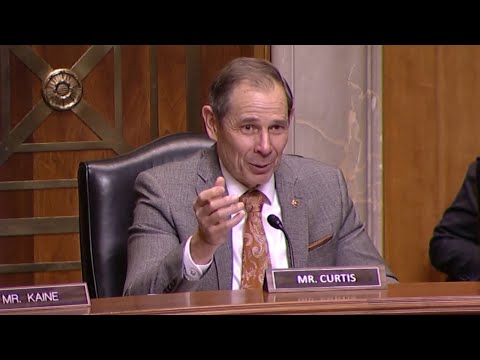
Senator Kaine opened a hearing of the Western Hemisphere Committee to mark the five‑year anniversary of the Taiwan Allies International Protection and Enhancement Act, saying the law "has been pivotal in protecting Taiwan's remaining diplomatic allies from Beijing's coercion." He and witnesses urged the United States to redouble diplomatic and economic engagement with Taiwan’s partners in Latin America and the Caribbean.
The hearing centered on three linked concerns: Beijing’s use of economic incentives and political pressure to pull diplomatic recognition away from Taiwan; the security implications if Taiwan’s diplomatic isolation accelerates; and the mixed record of PRC‑backed infrastructure projects in the region. Kaine announced he will join a bipartisan group to introduce the Taiwan Allies Fund Act to dedicate a portion of existing counter‑PRC funding to help countries that stand with Taiwan.
An academic witness testified that the number of Taiwan’s diplomatic allies is a factor in regional security calculations, arguing that reductions in recognition make the prospect of conflict in Asia more likely and enable greater PLA power projection. The witness said diplomatic “flips” are often accompanied by nontransparent memoranda of understanding and expanded access for PRC companies in critical sectors such as electricity and telecommunications.
"If Taiwan were to fold that would have, probably about a 10% disruption to the global economy," Ms. Custer, a panelist and researcher, told the committee, characterizing Taiwan as the world’s leading supplier of semiconductors and emphasizing the economic vulnerabilities that could flow from reduced Taiwanese autonomy. The figure was presented as an estimate by the witness; the committee did not present a formal, independent forecast.
Witnesses discussed Panama as a case study. Panelists said Panama’s announced withdrawal from the Belt and Road Initiative was symbolically significant but contractually limited, and cautioned that opening even a Taiwanese liaison office could trigger intense PRC pressure. The academic witness recounted incidents in which governments reversed or curtailed plans to host Taiwanese offices under pressure and warned of commercial actors and firms aligned with PRC interests seeking to operate ports or infrastructure projects.
Panelists also pointed to examples they said illustrated the risks of PRC‑led deals that then underdeliver: the witness referenced research using IMF data showing that, in some cases, expected gains from PRC projects did not materialize and cited specific project failures mentioned in testimony (including a high‑profile Route 32 project and a cited $600 million electricity promise that did not come to fruition). The witness also described instances where officials who supported diplomatic flips later benefited from PRC contracts or employment with PRC firms, noting those as part of a broader pattern of inducements and influence.
Throughout the hearing, senators emphasized the need to distinguish the Chinese government’s actions from the Chinese people and culture. Senator Kaine said criticism was directed at the authoritarian PRC government’s tactics rather than at the Chinese people.
The committee’s discussion closed with testimony that public attitudes in affected countries can sour after high‑profile projects fail to deliver promised benefits—what one panelist called "buyer's remorse"—and that tailored U.S. incentives and diplomatic support could make liaison offices or technical representation more feasible.
No formal votes or motions were recorded during the hearing. Senators announced plans to pursue legislative follow‑up, including the proposed Taiwan Allies Fund Act, and to continue oversight and engagement with countries in the Western Hemisphere that maintain ties with Taiwan.