Get Full Government Meeting Transcripts, Videos, & Alerts Forever!
Get email alerts on the Youth Services topic
No spam. Unsubscribe anytime.
Commissioners approve interim agreement for Eaton County youth facility; director reports near-capacity
Summary
The board approved an annual interim agreement continuing trial-court operation of the county youth facility. Director Jeremy Mulvaney reported 13 of 14 secure beds occupied, non-secure residential treatment at capacity, and new daily rates of $250 for detention and $325 for residential treatment.
The Eaton County Board of Commissioners on Dec. 4 approved the annual interim agreement for the operation of the county youth facility, authorizing continued management and oversight by the trial courts.
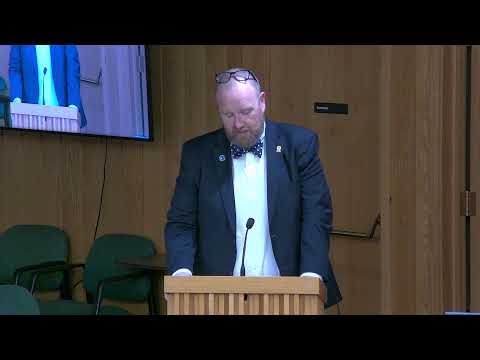
Court Administrator Amy Edsall introduced Jeremy Mulvaney, director of the youth facility, who provided capacity and programming updates. Mulvaney said 13 of 14 secure beds that were open were occupied at the time of his report and that the non-secure residential-treatment program was at capacity. He said the day-treatment program had 15 youth ordered to attend and that the facility recorded about 168 intakes across programming this year.
Mulvaney also told commissioners the facility had raised rates for out-of-county placements: detention programming is charged at $250 per day and residential-treatment services at $325 per day, which generates some revenue for Eaton County. He said hiring and training remain the larger operational challenge: initial training is intensive (Mulvaney described roughly 80 hours for basics and additional de-escalation/physical-management training), and retention of newer hires is difficult.
Commissioners moved and the board approved the resolution to continue the interim agreement by voice vote; no roll-call tally was recorded in the transcript. Following the vote, commissioners thanked court staff and Mulvaney for operating the facility and noted the county could not match the court’s operational model if it attempted to run the facility independently.
Next steps: the courts will continue monthly reporting on census, revenue, and expenses to the Ways and Means Committee as part of ongoing oversight.