Get Full Government Meeting Transcripts, Videos, & Alerts Forever!
Get email alerts on the Data Center topic
No spam. Unsubscribe anytime.
Residents urge commissioners to pause proposed Kingsborough data‑center sale, citing water, air and justice concerns
Summary
Dozens of residents and environmental justice advocates urged Edgecombe County commissioners to halt a proposed sale of county land in Kingsborough for a large data‑center/energy project, citing water use, air emissions from on‑site generators, noise and disputed job and tax‑revenue claims; commissioners agreed to take public comments into consideration and signaled more study.
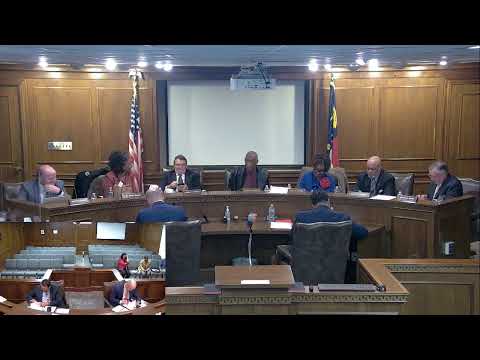
Residents from Kingsborough and neighboring communities packed the county commission meeting to oppose moving forward with a proposed data‑center and accompanying energy‑storage/generation components on county‑owned land in the Kingsborough Industrial Park.
Janice Bullock, a Kingsborough resident who submitted a petition of more than 200 signatures, said the industrial park is part of the local community and warned commissioners that comparisons to distant Memphis projects do not reflect local impacts: "We are not getting clear information… the Kingsborough Industrial Park is not in the middle of nowhere. It's in our community," she said.
Multiple speakers raised environmental, public health and equity concerns. Rosita Cox, who identified herself as co‑director of a statewide environmental justice network, told the board the company’s own documents indicate the project may "drill and burn natural gas, may require a gas pipeline, and may operate large diesel generators," and argued the proposal amounts to an off‑grid industrial power plant rather than a conventional data center. "Natural gas combustion and diesel emissions pose very serious health risks," Cox said, and she cited drought conditions and concerns about PFAS and other contaminants in water supplies.
Community members questioned the jobs and tax‑revenue claims. Rania Mosseri, co‑director of the North Carolina Environmental Justice Network (speaking from Wake County), said company documents show only about 69 permanent positions, and she noted that depreciation and exemptions can reduce long‑term property tax revenue. "This company claims 500 jobs, yet its own documents show only 69 permanent positions," Mosseri said.
Other residents voiced fears about noise, water capacity and the fairness of rezoning and permitting processes. Several speakers asked why zoning language had been changed to allow data centers prior to more extensive public outreach and why county land was being considered for sale. Jennifer Eason, who identified herself as a third‑generation farmer, requested a moratorium to allow more time for public information and study.
Board reaction and next steps: Commissioners thanked speakers and acknowledged the depth of community concern. Several commissioners said they would request further environmental analyses, meet with residents who live near similar facilities, and consider restrictions before any final approvals. Chairpersons and staff emphasized the current zoning is in place and that any formal economic‑development negotiations often occur in closed session; the board later entered executive session to discuss economic‑development matters.
What remains unresolved: Commissioners said they have been told by developers that initial water demand for an early phase would be about 500,000 gallons per day, a figure some residents disputed and others said could grow with build‑out. County staff acknowledged that additional technical details — number and type of generators, precise water‑use modeling, emissions profiles and emergency‑response capacity — have not yet been fully documented in materials provided to the public and pledged to keep answering questions as they receive more information.
The meeting produced no final vote to sell county land; commissioners instead accepted public comments, described next steps for outreach and study, and moved to a closed session to continue economic‑development discussions.