Get Full Government Meeting Transcripts, Videos, & Alerts Forever!
Get email alerts on the Opioid Settlement topic
No spam. Unsubscribe anytime.
County approves amended opioid‑settlement MOA after community‑paramedic update
Summary
Edgecombe County approved an amended memorandum of agreement to expand and reprioritize opioid‑settlement strategies after a 12‑month update from the county’s community paramedic. Staff reported nearly 900 Narcan boxes distributed and early returns from syringe‑service and post‑overdose response efforts.
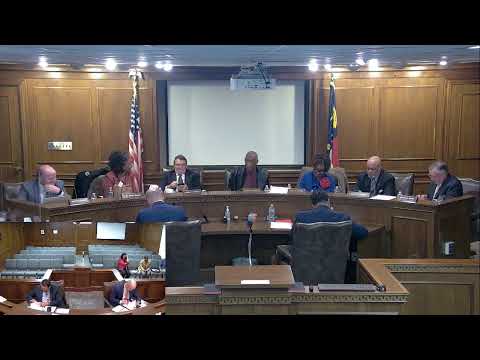
Edgecombe County commissioners voted to approve an amended memorandum of agreement (MOA) that reallocates opioid‑settlement funds to expand locally led interventions, following a 12‑month update from Dalton Barrett, the county’s community paramedic and manager of the opioid settlement project.
Barrett told the board the county’s settlement allocation totals $5.1 million spread over 18 years and that staff are pursuing sustainable uses rather than one‑time spending. “The money I'm talking about is the 5.1 million dollars that we're getting over 18 years,” Barrett said. He described two pathways available to the county — “Option A” (a set of 12 allowable, faster‑start strategies) and a more intensive Option B that can take about a year to implement — and said the board was being asked to approve only Option A strategies at this time.
Why it matters: Commissioners said they favored measured, evidence‑based spending after hearing outputs from existing work. Barrett reported the county’s investments have supported partners and services across the region: Rocky Mount Treatment Center treated about 225 people; Freedom Hill Community Health Center served roughly 140 patients under an office‑based opioid treatment program; the post‑overdose response team referred nearly 50 people into addiction treatment for the first time; and the syringe services program has engaged 31 participants, six of whom Barrett said no longer use drugs.
Barrett also highlighted preventive and outreach work: “We distributed, you know, almost 900 boxes of Narcan in our community…we trained, you know, 530 some odd people,” he said, and noted the program’s point‑of‑care hepatitis C tester — funded by a North Carolina DHHS grant — can deliver results in about 55 minutes, shortening the time to treatment.
Board action and next steps: Staff told commissioners that a little over $1.9 million of settlement funding was currently available for allocation under the amended agreement. After a brief question period, a commissioner moved to approve the amended MOA and the board approved it by voice vote. The county will proceed with the outlined Option A strategies, continue collaboration with treatment providers and evaluate subrecipient partnerships to expand capacity.
What supporters and critics said: Barrett described partnerships with Duke University on a clinical research/photo‑voice project and with state agencies that have recognized the program’s model. Commissioners asked for follow‑up reporting and said environmental and budgetary stewardship would guide future allocations.
The board’s approval permits staff to implement the revised Option A priorities; commissioners asked staff to provide ongoing metrics and to return with more detailed budget allocations for any new subrecipient awards.