Get Full Government Meeting Transcripts, Videos, & Alerts Forever!
Get email alerts on the Employee Benefits topic
No spam. Unsubscribe anytime.
Arlington ISD holds benefits workshop as trustees weigh leaving TRS ActiveCare
Summary
Arlington ISD staff presented claims and premium data Nov. 6 and gathered staff feedback on three options for district health benefits: stay with TRS ActiveCare, stay but tighten wellness incentives, or leave TRS and self-fund. Staff will return with an administrative recommendation before the district's December decision deadline.
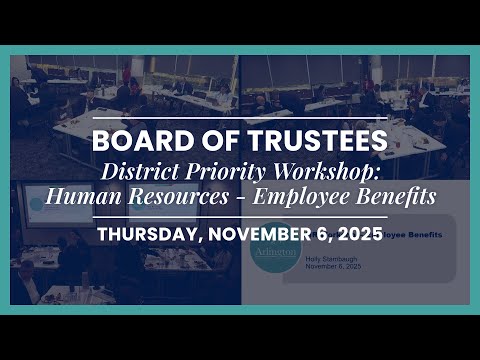
ARLINGTON, Texas ' At a Nov. 6 district-priority workshop, Arlington ISD staff laid out multi-year premium trends, recent claims data and three policy options for employee health benefits, and asked trustees and staff to test ideas to reduce high-cost claims.
The workshop, introduced by Superintendent Dr. Smith and led by benefits staff Holly Stanbaugh with consultant Scott Kale, presented district figures showing premium collections of about $36'37 million and paid claims near $45 million in 2024'25, a gap staff said contributed to a reported 122% loss ratio for that year. "We're sending more to the plan than what we're putting in the plan," Stanbaugh said as she reviewed the district's claims data. She also noted one individual high claimant cost at roughly $1.4 million and estimated high-claimant totals near $14 million.
Why this matters: the district is weighing changes that could affect employees' premiums, provider networks and out-of-pocket costs. Stanbaugh said employee-only premiums run about $189 for paraprofessionals and $204 for professional staff, while family coverage can "be as expensive as about $1,700 to $1,800 a month" for some households. Out-of-pocket maximums cited were roughly $6,900 for individuals and up to about $16,000 for families.
Staff framed three principal options for trustees' consideration. Consultant Scott summarized the trade-offs: staying with TRS ActiveCare provides stability and broad network access but, he warned, "it's safe" and likely to continue producing double-digit annual increases; a middle course would keep TRS but strengthen wellness incentives to change behavior and lower costs for engaged employees; and leaving TRS in favor of a self-funded model would give the district more control over plan design and cost levers but expose it to greater financial risk and require stop-loss insurance and other safeguards. "There is no right answer," Scott said.
Workshop participants worked at tables to propose preventive and wellness interventions (examples included smoking-cessation programs, mobile-screening units at professional learning events, campus fitness competitions, partnerships for fitness bands, on-site clinics and simplification of the wellness app). Staff emphasized that increasing wellness participation and addressing high-cost claimants were central to improving the district's claims-to-premium balance.
The presentation also reviewed state rules on opt-out timing and a potential risk-stabilization fee districts might face if they leave TRS and later try to re-enter. Stanbaugh said districts that have left have sometimes passed stabilization costs to employees; she warned that leaving can carry a one-year fee and other hidden costs.
Staff reported steering-committee feedback collected earlier: about 47% recommended leaving TRS ActiveCare to create capacity for local control, roughly 38% favored staying but enhancing wellness incentives, and about 15% favored staying as-is; the transcript contains minor ambiguity about the middle percentage. Stanbaugh told trustees the team will return with an administrative recommendation ahead of a December deadline for any opt-out decision and that the item will appear again on a regular board agenda for further discussion.
The board recessed at 6:00 p.m. for a closed session under the Texas Government Code. No final policy decision or formal vote on changing plans was recorded at the workshop.
What officials said: Stanbaugh emphasized the district's recent loss ratio and the scale of claims when describing why trustees should consider multiple options. Scott urged trustees to weigh the trade-offs: stability and network breadth versus local control and increased financial exposure.
Next steps: staff will develop and present an administrative recommendation and supporting materials before the district's December decision deadline, including more information on costs, stop-loss options and provider-network implications.
Sources and attribution: quotes and figures are taken from staff presentations and table reports during the Nov. 6 Arlington ISD benefits workshop, Nov. 6, 2025. Direct quotations in this article are attributed to Holly Stanbaugh and Scott Kale, who spoke during the presentation.