
Belton ISD outlines plan with Temple College to expand dual credit, industry credentials and career pathways
Get AI-powered insights, summaries, and transcripts
Subscribe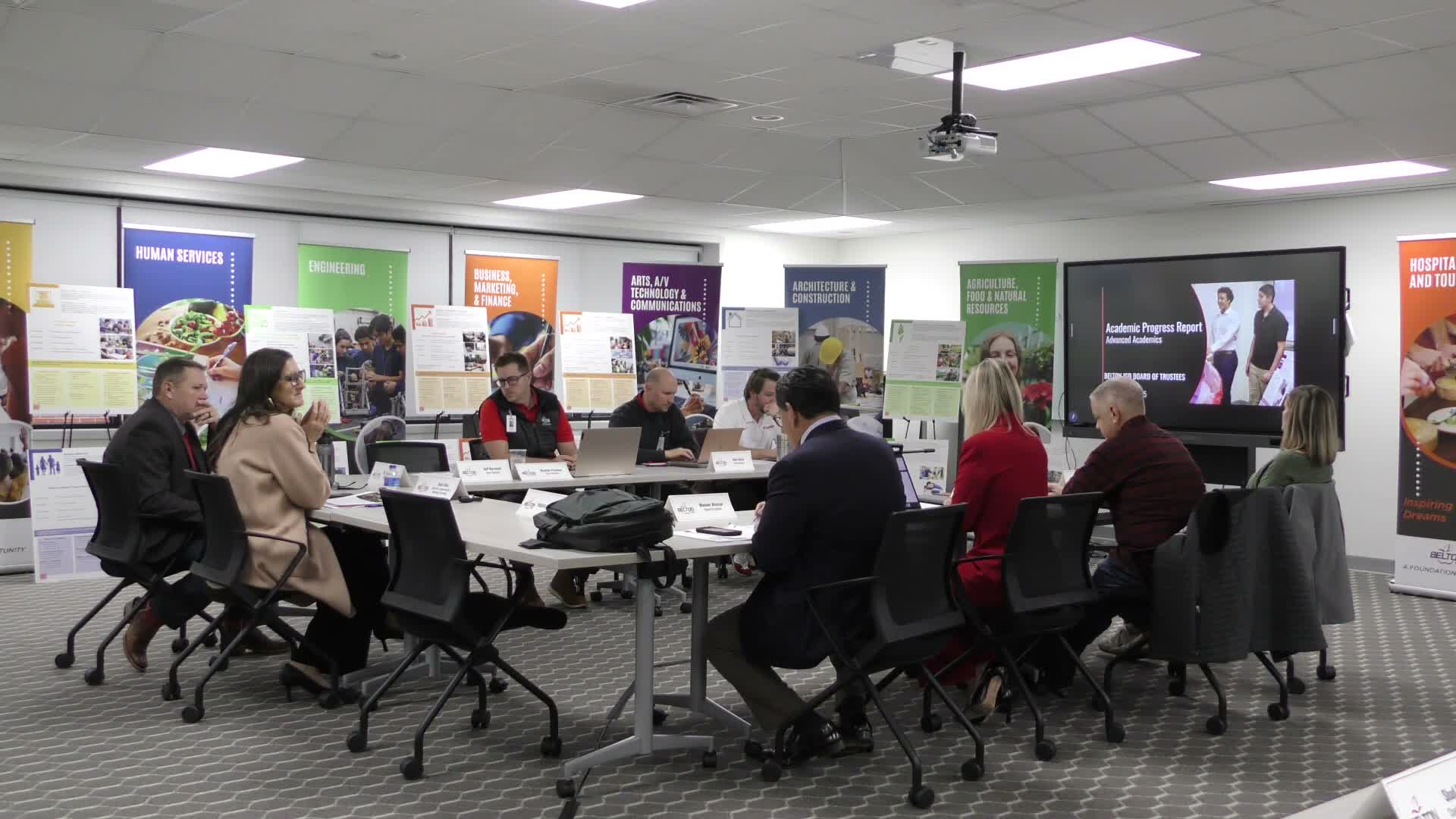
Summary
Belton ISD trustees heard a progress report on advanced academics and a new partnership with Temple College aimed at removing barriers to dual credit and accelerating students toward associate degrees, industry-based certifications and AP completion. District leaders set a 2028 target and described concrete advising and staffing strategies.
Belton Independent School District trustees received an academic progress report on Monday that outlined steps the district is taking to broaden access to advanced-academic opportunities and to expand a partnership with Temple College.
Assistant Superintendent for Teaching and Learning Gabby Nino framed the presentation around college, career and military readiness (CCMR), saying the district is pushing to grow students’ access to dual credit, industry-based certifications (IBCs), AP courses and associate degrees while they remain in high school. “We have a big aspirational goal that by 2028, 90% of our students will be able to say, I am actively in pursuit of this degree, and I’ve earned an associate’s degree, or I am credentialed in an industry aligned area, or I have earned 30 hours,” Nino told the board.
The district reported measurable recent gains in credentialing and enrollment. Nino said there was a 13.83% year-over-year increase in students earning IBCs; in 2024–25, 930 students earned at least one IBC and the total number of IBCs awarded exceeded 1,000. The district also reported higher AP-exam participation and growth in dual-credit enrollment.
Officials credited clearer advising and outreach for the improvements. Nino described new advising guides and posters intended to help students and families decide which advanced courses match a student’s goals. She said principals and counseling staff, with support from business and college partners, have helped identify students’ barriers and secure resources — including emergency funding and scholarships — to cover AP-exam fees for eligible students.
Nino and trustees discussed specific obstacles to expanding dual credit, including TSIA readiness requirements and uneven access tied to students’ locations and zip codes. The district said it is working with Temple College to identify courses that grant readiness through course completion, to offer TSIA boot camps as early as eighth grade and to credential district staff so they can teach embedded dual-credit sections on campus.
Temple College’s Dr. Ponce joined the meeting and described the college’s role as a partner. “Belton ISD for many years has set the bar really high for students, and there are more students that participate in dual enrollment from Belton ISD than anywhere in the region,” she said. Dr. Ponce noted Temple College has launched a university center that allows students to pursue multiple bachelor’s degrees locally and said the college waives tuition for classes taught by embedded instructors, which the district called a strategy to reduce cost and proximity barriers.
District staff outlined ongoing implementation steps: monthly joint planning meetings with Temple College, development of vertically aligned course progressions (crosswalks), marketing and storytelling with students, credentialing of staff to serve as embedded dual-credit instructors and consideration of staffing or stipend models to support counselors and instructors.
Trustees pressed staff on practical issues — how credits transfer, supports for students who struggle in dual-credit courses or TBI programs, counselor workload and the cost implications for the district. Nino committed to follow-up and regular updates as the partnership and course progressions are finalized.
The workshop ended without any formal motion or vote. The board adjourned at about 6:02 p.m.