Get Full Government Meeting Transcripts, Videos, & Alerts Forever!
Get email alerts on the Consumer Protection topic
No spam. Unsubscribe anytime.
PURA hearing: questions for Charter and Cox on background checks, contractor training, billing notices and data privacy
Summary
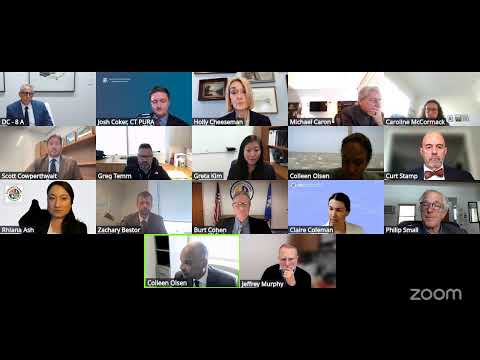
Attorneys from the Office of Consumer Counsel, the Attorney General and PURA staff questioned Charter and Cox about returned-payment fees, contractor background checks and behavioral training, complaint acknowledgement practices, and whether broadcast-TV surcharges and data-impact assessments will be handled transparently post-merger.
Attorneys at a Public Utilities Regulatory Authority late-filed-exhibit hearing pressed Charter Communications and Cox Communications on customer-facing protections and billing transparency as part of ongoing merger review.
Rhianna Ash, a telecom policy adviser for the Office of Consumer Counsel, asked whether the companies would commit to charging no more than $20 for a returned-payment fee following a failed transaction. The question drew an objection from Charter’s counsel and was sustained by the presiding officer; the companies pointed to commitments already set out in their merger applications.
On contractor screening and training, witnesses for Charter and Cox confirmed that contractors and employees receive background checks and behavioral training before entering customers’ homes. Cox’s Kurt Stamp told the authority the company ‘‘don’t have a formal process for that’’ acknowledgment because agents are empowered to resolve issues on first contact; when an issue is not resolved the agent will notate the account. Charter added that contractor background checks are recertified ‘‘on an annual basis.’’
Caroline McCormick from the Attorney General’s Office asked whether the applicants would provide an updated integration-plan statement 90 days after the merger close and whether they would file updated data protection assessments under a CTDPA provision; Charter objected that commitments are set in the application and the presiding officer sustained that objection for now.
On billing transparency, counsel reviewed sample bills and late-filed exhibit responses that reference Spectrum’s online tax-and-fee page. Charter witnesses said broadcast-TV surcharge information is delivered to customers through bill-message sections and that customers receive 30 days’ advance notice in their bill statements. Parties debated whether the broadcast surcharge is set nationally or differently across states.
PURA staff also asked whether background-check results and employment-related legal claims are retained and whether retention is centralized; Charter said records are kept in centralized legal-document locations but could not specify exact retention periods on the record.
The hearing concluded with parties reserving the right to pursue proprietary follow-up and the commission adjourning the late-filed-exhibit portion of the docket pending written briefs and any further closed-session review.