Get email alerts on the Ethics And Governance topic
No spam. Unsubscribe anytime.
Commissioners reject proposed MAC workers' comp seat rotation policy, 3-2
Summary
A proposal to rotate the MAC workers' compensation board appointment among the five commissioner districts and disclose compensation failed 3-2 after debate over transparency versus the traditional role of the board chair.
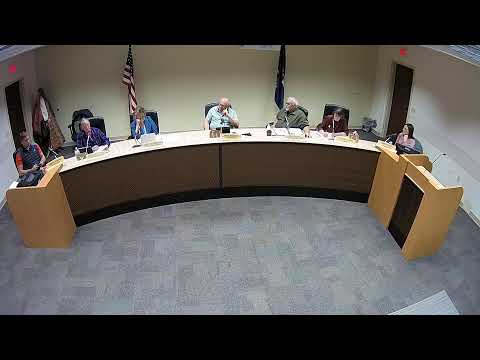
A proposal to formalize rotation and transparency for the MAC workers' compensation board seat failed on a 3-2 roll call at the Dec. 16 Delta County Board of Commissioners meeting.
Commissioner Williams introduced the policy, saying it would stop an informal practice she described as an opaque perk and would assure each district the opportunity to serve. "I brought this policy forward because the MAC workers compensation board seat has historically functioned as an informal mostly unknown perk," she said, adding that the proposal would not create new benefits but would make existing compensation transparent and introduce guardrails for fairness.
Opponents argued the county board chair historically carries broader responsibilities and that the chair's traditional privilege to serve on external boards provides continuity the county values. In the roll-call vote recorded at the meeting, Commissioner Johnson, Commissioner Jensen and Commissioner Mehlner voted against the policy while Commissioner Williams and Commissioner Vandenhove voted in favor; the tally was 2–3 and the motion did not pass.
Supporters said the policy would create predictable rotation and guardrails to prevent double compensation and would provide a model for other board appointments and stipends. Opponents said the chair’s workload and the informal tradition justified retaining discretion. The board did not adopt an alternative policy at the meeting; commissioners suggested continued discussion and review of board assignments before the Jan. 6 reorganization.
AI generated
The text on this page is AI generated. Summaries, highlights, analysis, and video transcripts are all produced from the original source material.
AI can make mistakes, so if you spot one, and we will fix it for everyone.
Note: the source content is unaltered by us. Any content source we link to, be it a video, an audio recording, or a document, is presented exactly as its publisher released it. That publisher is usually a government body, sometimes an individual official or another organisation.