Get Full Government Meeting Transcripts, Videos, & Alerts Forever!
Get email alerts on the Process:committee Representation topic
No spam. Unsubscribe anytime.
Negotiators reject adding separate civil‑rights seat; Department stresses consensus rules and contingency plan
Summary
A proposal to add a dedicated civil‑rights negotiator seat failed during an on‑the‑spot consensus check. The committee also discussed thresholds for caucuses, consensus mechanics, and contingency plans should federal appropriations lapse.
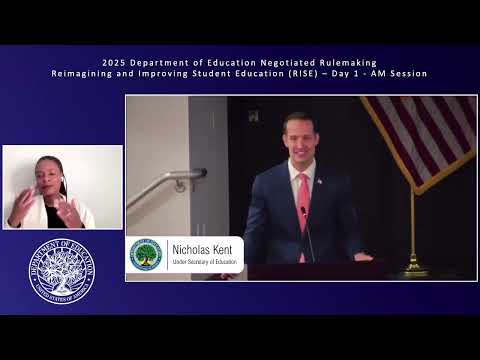
During introductions and protocol discussion at the RISE negotiated rulemaking, negotiator Ashley Naperele proposed adding a distinct negotiator seat to represent civil‑rights organizations, specifically naming Travis Jones as a candidate to fill that seat. Naperele framed the request as the civil‑rights community needing an independent voice rather than being combined with legal services and consumer advocacy representation.
"We propose to add an additional member to represent civil rights organizations and to make that a separate seat at the table," Naperele said, and suggested that Travis Jones, present in the room, could take the seat immediately. Department staff and other negotiators objected that constituencies had already been identified and consolidated as needed. The facilitator took a nonbinding consensus check (thumbs up/down/no thumb); the proposal did not pass.
Anne Marie Weisman recorded the results for the transcriber: Andy Vaughn, Jenna Colvin, Alex Ritchie, and Tammy Abernathy registered thumbs down; Alex Holt abstained. The facilitator noted that adding a formal seat would require consensus and that primary and alternate negotiators together represent their constituency. The Department reminded negotiators that alternates may speak in place of primaries for some topics if the group agrees, but the group prioritized orderly topic‑level switches to reduce disruptive back‑and‑forth.
Separately, Deputy Assistant Secretary Jeff Andrade outlined a contingency plan in case of a lapse in appropriations: the committee could pivot to a virtual format for remaining session days and the Department will publish a Federal Register notice describing contingency arrangements. Andrade emphasized that Congress set statutory effective dates in the legislation, which increases the urgency of the timeline.
The committee will continue deliberations, and the facilitator reminded attendees that caucuses may be convened by any member and that a caucus suspends formal table discussion while it proceeds.