Lifetime Citizen Portal Access — AI Briefings, Alerts & Unlimited Follows
Education Department lays out statutory loan caps, sets new annual and lifetime limits
Loading...
Summary
The U.S. Department of Education proposed regulatory text implementing Congress’s fixed loan limits: $20,500 annual for graduate students, $50,000 for professional students, aggregate and lifetime caps (e.g., $100,000/$200,000 and $257,500). Agencies stressed they lack discretion to change fixed statutory numbers.
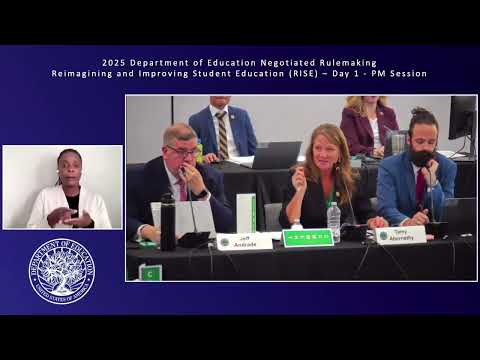
The U.S. Department of Education presented proposed regulatory language on Sept. 30 to implement statutory changes that limit how much students and parents may borrow under federal student loan programs.
Tammy, a Department presenter, said the regulations track statutory language and listed the main numeric caps: beginning July 1, 2026, graduate students would face an annual unsubsidized loan limit of $20,500 and professional students a $50,000 annual limit. Aggregate and lifetime caps would also change; for example, certain graduate students would be subject to a $100,000 aggregate cap while professional students could face a $200,000 aggregate ceiling, and a new lifetime maximum across Title IV loans was proposed at $257,500.
Department staff repeatedly emphasized the limits were set by Congress and, absent explicit statutory indexing or delegation, the Department would not alter the fixed figures. As Jacob, a Department staff member, put it during the session, the agency’s “hands are literally tied” where Congress imposed absolute numbers.
Participants pressed for operational detail. Negotiators asked how joint degrees would be treated, whether undergraduate borrowing would be included in graduate aggregates and how schools should treat students whose enrollment status changes after disbursement. Tammy said institutions must apply any institutionally determined loan limits consistently, notify current and prospective students clearly, and retain documentation of decisions.
The Department also proposed permitting institutions (effective July 1, 2026) to impose program-level loan limits applied uniformly to all students in a program, and to publish a Secretary-issued schedule that reduces loan eligibility for students enrolled less than full time. Department staff said the schedule of reductions is under review and will be provided to negotiators prior to the next session.
Why it matters: The changes narrow federal borrowing for many graduate and professional programs and shift significant operational responsibility to colleges and universities to implement the rules, publish notices and maintain records. Negotiators raised concerns about programs that are not explicitly named as “professional” in the proposal (for example, some clinical psychology tracks) and urged the Department to clarify how the professional list will be updated in the future.
Next steps: Department staff said they will take several operational follow-ups (including whether specific programs previously eligible for supplemental funds under other initiatives will be affected) and return with clarifications at the next meeting and in written responses.