Get Full Government Meeting Transcripts, Videos, & Alerts Forever!
Get email alerts on the School Rezoning topic
No spam. Unsubscribe anytime.
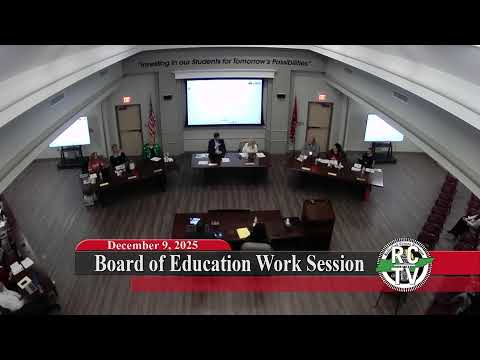
Rutherford County BOE hears rezoning options, staff urges grandfathering of rising eighth graders
Summary
District staff recommended two rezoning concepts for elementary and middle schools and recommended grandfathering rising eighth graders under Concept 2. Board members pressed for clearer five‑year planning, discussed caps at hot‑zone schools and urged joint planning with the county commission to fund new buildings.
The Rutherford County Board of Education work session heard a presentation from district staff and RSP projecting rapid enrollment growth and outlining two rezoning concepts for elementary and middle schools. Director Dr. Sullivan said staff’s recommendation was to adopt either concept for elementary schools and to prefer concept 2 for middle schools, adding that the board should consider grandfathering rising eighth graders.
The director said the district received more than 450 comments and that the public-engagement QR code had ‘‘well over 20,000’’ clicks during outreach. Rob Schwartz of RSP summarized mapping and travel-time visuals used to locate student clusters and forecast five‑year growth, saying the analysis shows development concentrations north and south of Rocky Fork that will drive future capacity needs.
Why it matters: board members said the county’s rapid residential development is already driving repeated rezoning and disrupts families. Several members urged the board to coordinate with the county commission on land acquisition and capital planning rather than repeatedly shifting attendance zones.
Board members pressed staff on operational consequences. One member illustrated transportation costs and urged the district to ‘‘plan for core capacity’’ so additions could be built out later; another warned that repeatedly rezoning neighborhoods creates confusion for parents. Dr. Sullivan acknowledged the political and fiscal limits: he said county funding conversations will be crucial and that the county has reached debt‑capacity limits without a tax increase.
On grandfathering, Dr. Sullivan and multiple board members discussed allowing current seventh graders to remain in the same school as they move to eighth grade if concept 2 is adopted. Board member comments focused on tradeoffs: grandfathering preserves student continuity but would increase transportation and staffing costs and could require duplicative teachers in year one.
Several board members proposed other tools to manage hot zones, including temporarily capping enrollment at schools nearing capacity and pressuring developers to contribute land or funding for schools in growth areas. Staff cautioned that caps would shift students elsewhere and might require portables or new construction if neighboring schools are already full.
Next steps: staff told the board the rezoning item will be revisited on Thursday for action; staff also plans to finalize a January timeline for grandfathering deadlines and to bring clearer five‑year‑plan scenarios to the board and to the county commission.