
City and schools flag driver shortage and rising facilities/transportation contract costs
Get AI-powered insights, summaries, and transcripts
Subscribe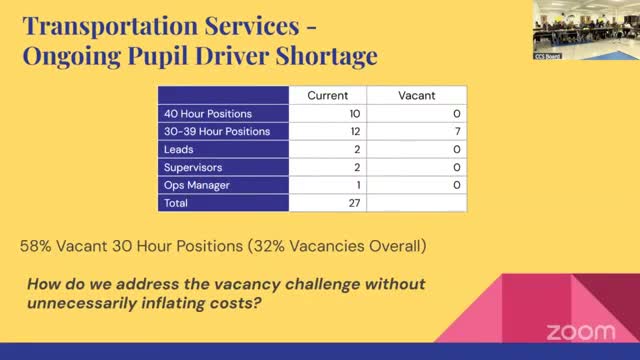
Summary
City and school operations staff told the joint work session that a 58% vacancy in key bus-driver roles and growing maintenance costs are straining services; staff presented 5‑year average placeholders ($394,004 maintenance increase; $487,062 transportation increase) and discussed options including adding six 40‑hour driver positions.
Operations staff for the school division and the city outlined operational pressures that could affect service delivery and the FY27 budget.
On facilities, staff described the maintenance budgeting approach: two primary labor groups (HVAC/electrical and general maintenance), job‑level tracking of supplies through a work‑order system, and utilities allocated by meter to buildings. An updated memorandum of agreement with the city is in draft and intended to clarify service standards, not to change the scope of services. Staff presented a five‑year average placeholder that produced an estimated maintenance contract increase of about $394,003.79.
Student transportation was a major focus. Presenters said the 30–39‑hour driver classification faces a 58% vacancy rate, producing a 32% overall vacancy effect in transportation staffing. Staff described operational workarounds — daily double‑backs, principals and operations managers driving when necessary, and dispatch assistance from administrative staff — and said the five‑year average projects a $487,062 increase for the transportation contract. The presenters discussed a possible near‑term option of adding six 40‑hour positions to address critical vacancies through the remainder of the school year and the summer.
Board and council members pushed for clarity on whether 30‑hour positions receive benefits (the presentation indicated they do, but with an adjusted employer contribution rate) and urged the city–schools team to explore multiple solutions without unnecessarily inflating permanent full‑time staffing if other mixes could meet demand.
Staff framed both facilities and transportation increases as preliminary projections based on historical averages and operational realities; both items will be refined as budget work continues and as the city and school leadership evaluate trade‑offs.