Get Full Government Meeting Transcripts, Videos, & Alerts Forever!
Get email alerts on the Tax Policy topic
No spam. Unsubscribe anytime.
Sweetwater assessor warns commissioners about multiple draft property‑tax bills, flags major workload and valuation risks
Summary
Assessor Dave Davis briefed commissioners on several draft state bills — from clarifying taxation of government‑owned property to proposals that would change assessment methods and timelines — and warned some measures could create impractical workload and valuation problems for county assessors.
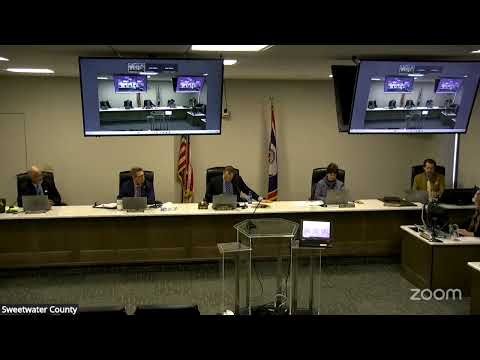
Sweetwater County Assessor Dave Davis told the Board of County Commissioners on Nov. 18 that the state revenue committee planned to hear a slate of draft bills that could materially affect property taxation and county workloads if enacted.
Davis listed a number of draft measures by legislative service office numbers: "LSO 26 LSO 202," a cleanup addressing whether certain government‑owned property is taxable; LSO 99, which would repeal the sunset on the long‑term homeowners exemption; and LSO 100, a proposed constitutional amendment that would remove the residential assessment rate (Davis noted that change would require legislative steps and a vote of the people). He said the residential valuation base in Sweetwater County was about $242 million or roughly 10–11% of total valuation.
Davis identified two bills that he said would be particularly problematic: LSO 101, a "value on transfer" proposal that would roll values back to 2019 and 2020 and then apply annual inflation factors — a change he described as “physically impossible” to process in one year — and LSO 102, which would give the legislature authority to determine how property is valued for tax purposes, potentially eliminating the constitutional separation of land and improvements.
He also outlined LSO 103 (dropping the residential assessment rate to 8.3%), LSO 104 (increasing disclosure requirements to taxpayers and shortening the time staff would have to prepare appeal materials), and a Harshman bill that would replace portions of property tax revenue with higher sales tax revenues in early implementation years. Davis urged caution and said several of the bills had many procedural steps to clear before becoming law. He encouraged commissioners to monitor the revenue committee and noted county staff and the county’s legislative contacts would continue to follow developments.
"This bill to me is a huge nightmare, and I hope this 1 dies a horrible, horrible death," Davis said of the value‑on‑transfer proposal, adding he believed the work required by that approach could not feasibly be completed in the timeline described by the draft.