
Sherburne County delays revocation of wine‑bar permit, directs staff to draft stricter conditions
Get AI-powered insights, summaries, and transcripts
Subscribe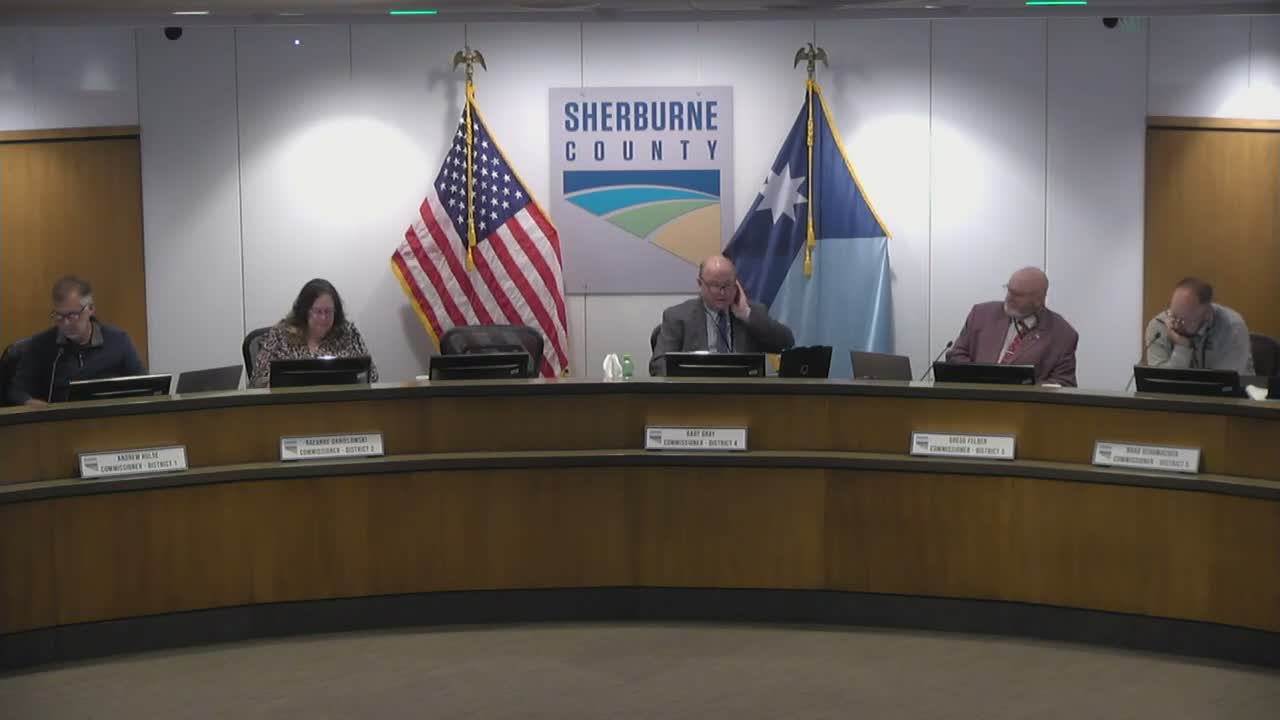
Summary
After the planning commission recommended revoking a conditional‑use permit for a farm‑related wine bar in Becker, the Sherburne County Board declined immediate revocation and asked staff to draft clarifying amendments — chiefly on hours, employee eligibility and signage — for formal action in January.
The Sherburne County Board of Commissioners on Tuesday declined to immediately revoke the conditional‑use permit for a farm‑related wine bar in Becker and instead directed staff to prepare amendments clarifying several of the permit’s conditions.
Planning staff told the board the planning commission had recommended revocation of the permit for the business known in packet materials as the Boulder Creek wine bar, citing multiple written violations recorded between September 2024 and October 2025, including live music and food service outside permitted scope, liquor licensing problems, signage beyond the 12‑square‑foot limit, repeated hours‑of‑operation breaches and vehicle counts that exceeded the permit’s limits.
Ian McCoy, attorney for the permit holder, urged the board to amend the permit rather than revoke it. “Under Minnesota law, a CUP is a property right, and there must be a legally justifiable reason to revoke a CUP,” McCoy said, arguing that neighborhood opposition alone does not meet that standard and offering a draft amendment that would require customers to be off the property no later than 30 minutes after posted closing hours.
Planning staff confirmed a series of violation letters and described the recommended clarifications. Staff said one proposed change (for condition 8) would explicitly require “all guests and customers must be off the property no later than 30 minutes after the hours listed above.” For condition 14 the proposed language would limit employees to residents of the property and their children.
Board members debated whether amendments would simply codify existing expectations or expand the business’s capacity. Some commissioners argued the business had drifted from its agricultural intent into a more typical commercial bar operation and recommended strict adherence to the original conditions if the board did not revoke the permit. Others said the record showed ambiguities that should be clarified so that the county and the permit holder alike understand enforceable rules.
By consensus the board directed staff to draft proposed amended language on the hours provision and employee limitation, to consider clarifying how signs are defined (condition 13), and to ask the applicant to provide a written plan for staying within the limit on customer vehicles (condition 7) and the log of activities (condition 16). The board asked staff to return the proposed amendments for formal action in January.
What happens next: Staff will work with the county attorney and the Minnesota Land Trust‑related staff where relevant, draft precise amendment language for conditions identified during the meeting, and present those options at a future meeting for a final vote.