Get Full Government Meeting Transcripts, Videos, & Alerts Forever!
Get email alerts on the Attendance topic
No spam. Unsubscribe anytime.
Springfield schools pilot two‑way texting, cites early drop in chronic absenteeism
Summary
Assistant Superintendent Jose Escribano briefed the School Committee on 'Attend Today, Achieve Tomorrow,' an attendance initiative that emphasizes family‑focused interventions and a Central High pilot of two‑way texting. Principal Tad Tokar said texts enable real‑time parent responses and faster enrollment reconciliation.
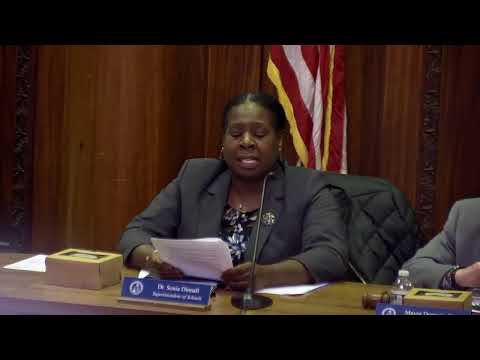
Assistant Superintendent Jose Escribano told the Springfield School Committee that the district is shifting away from punitive attendance measures toward family‑focused, data‑driven interventions and staff capacity building.
"Attendance is moving in the right direction this year as we move to reducing chronic absenteeism," Escribano said, citing district charts showing year‑to‑date improvements and a targeted effort in priority schools. He outlined a tiered approach that includes strengthened school‑based attendance teams, attendance specialists and a root‑cause analysis process to tailor interventions for families.
The committee heard details about a pilot at Central High School that uses a two‑way texting platform to send immediate notifications when a student is marked absent. "If a student is absent, say, from first period, teacher takes attendance, there's a text message that goes home to the parent on record," Principal Tad Tokar said. He described how parents can reply with an explanation, upload notes that feed directly into PowerSchool as excused absences, and how some responses have surfaced issues—such as reports of bullying—that triggered faster staff intervention.
Escribano described the pilot as configurable at the school level: messages can be pushed at different times of day, and the system can be set to indicate full‑day absences or specific blocks. He said the district is pairing technology with human follow‑up: a home‑visit team and daily outreach by an attendance officer to address chronic cases.
Committee members asked about rollout and cost. Vice Chair Monroe Naylor asked when the district would consider scaling the tool beyond Central. Escribano said the administration intends to review midyear data and discuss broader implementation only after confirming trends and identifying sustainable funding sources. "We want solid data before we start that conversation," he said.
Tokar told the committee the pilot has helped improve enrollment accuracy and save time: what previously took a month to reconcile at Central can now be identified in a week. Escribano said Central has trended about a 1 to 1.5 percent reduction in chronic absenteeism since starting the program.
Why it matters: chronic absenteeism is tied to lower academic performance, and the district framed the texting pilot as one component of a larger strategy that includes partnerships with pediatricians, enhanced cleaning when illness spikes, and home‑visit outreach.
Next steps: the administration will continue the Central pilot, collect midyear data and report back to the committee before recommending wider rollout or district funding.