
Wayne County Public Schools audit returns clean opinion but shows shrinking fund balance
Get AI-powered insights, summaries, and transcripts
Subscribe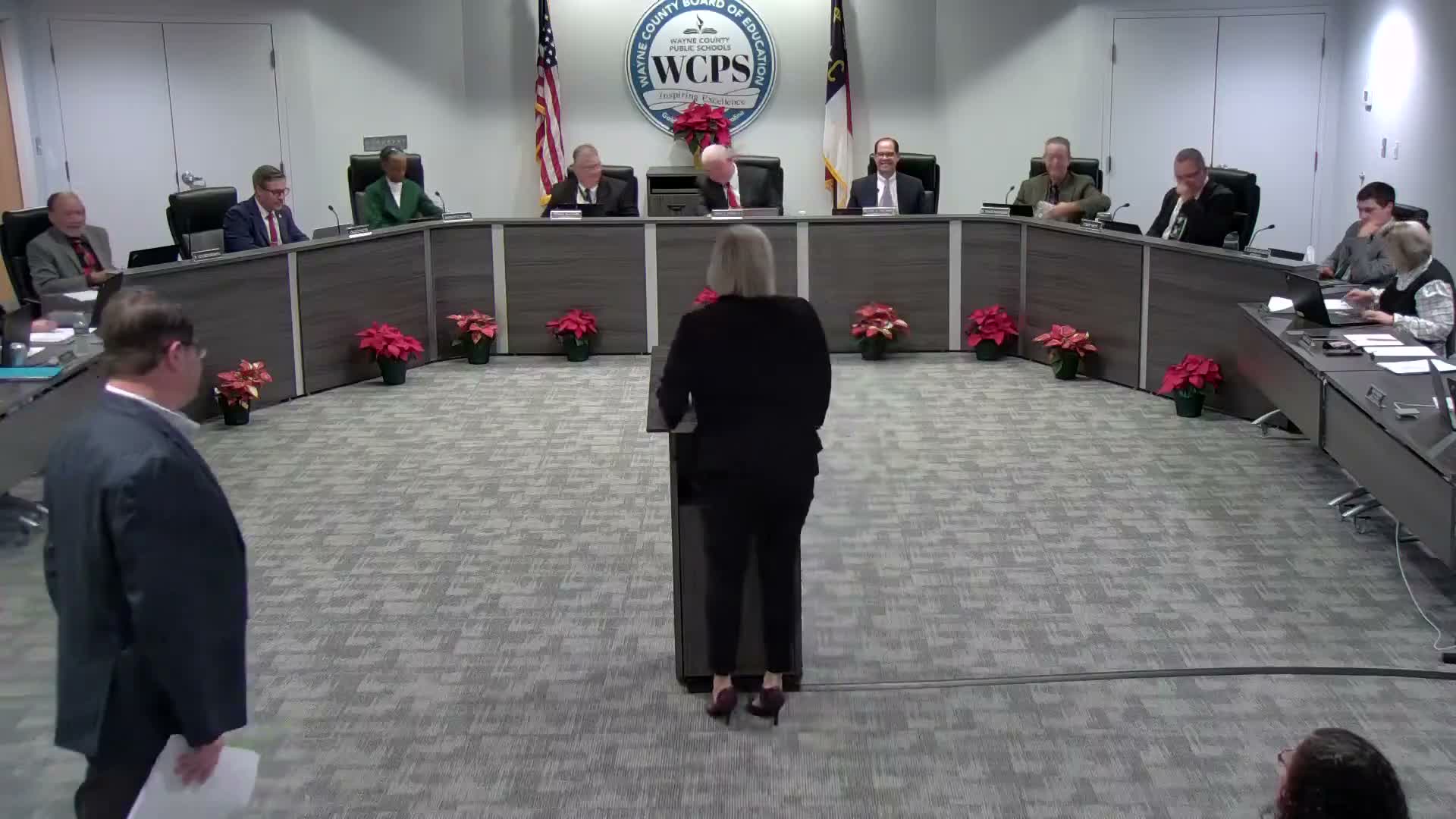
Summary
Auditors gave Wayne County Public Schools a clean (unmodified) opinion on fiscal 2025 financial statements but noted a $3.2 million drop in general fund balance and cautioned that continued use of reserves at current rates could deplete available fund balance in a few years.
Auditors presented the district's fiscal year 2025 financial audit in draft form at the Dec. 1 Lincoln Board of Education meeting and said the draft can be finalized immediately because federal compliance supplements were only released in late November. Adam Skopurick, introduced by the audit firm, told the board "none of the numbers will change" in the final report and that the supplements only affected the dating of the statements.
The auditors issued a clean, unmodified opinion on the financial statements for the year ended June 30, 2025. They highlighted a change in accounting principle related to GASB guidance to recognize sick-leave liability, which appears as an explanatory paragraph and does not affect cash available for appropriation. "It really was just a matter of dating these after the supplement date," the auditor said, adding the substantive audit steps and numbers remain unchanged.
Key figures presented to the board: the general fund total fund balance was shown as $6,302,000 (a $3.2 million decrease from the prior year), with $920,000 recorded as inventory that is not available for appropriation. The auditor said roughly $4.7 million was unassigned and about $677,000 already appropriated in the adopted 2025-26 budget. The restricted revenue fund balance was listed as $77,495,000 (a $2.8 million decrease). Together, the auditor said the district had about $12.8 million in fund balances across funds and that using $6.0 million per year would exhaust available fund balance in roughly two years under current assumptions.
The report also detailed federal grants and child nutrition accounts: auditors noted $17.9 million in ESSER COVID-19 stabilization funds had been largely spent on improvements such as roofs and air-handling systems, and that federal grant levels are expected to return to roughly $20 million in 2025-26. The Child Nutrition Fund was reported to hold approximately $10.46 million in cash and cash equivalents; auditors said the program's high participation and reimbursement rates have allowed it to remain self-sustaining.
On internal controls and compliance, the auditors reported no material weaknesses and no significant deficiencies. The district received clean letters on both state and federal compliance for the programs audited (Title I, the SCI program and ESSER among federal programs; state public school fund, CTE, NC Pre-K and school technology on the state side).
Board members thanked finance staff for the work that produced a clean audit and voiced appreciation for the clarity of the presentation. The board attorney characterized the audit as an information item, not one requiring formal acceptance vote.
Next steps: auditors indicated they will send a management representation letter for signatures so the district's audit can be dated and finalized. The board heard a cautionary note from the auditor about current fund-balance usage and the importance of planning for long-term reserve sustainability.