Get Full Government Meeting Transcripts, Videos, & Alerts Forever!
Get email alerts on the Industrial Site Plan topic
No spam. Unsubscribe anytime.
Sortera site plan advances as contractor pledges noise testing before occupancy
Summary
At a Lebanon Planning Commission meeting, Sortera Technologies’ contractor described machines that trap dust and proposed post‑installation noise testing, asking the city to withhold a certificate of occupancy until noise standards are met.
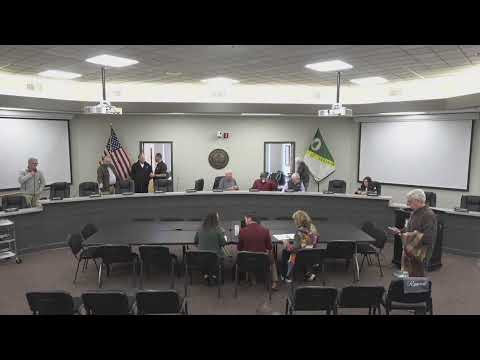
Lebanon — Sortera Technologies’ site plan for a roughly 20.96‑acre nonresidential development at 400 Innovative Way drew detailed questions about noise and emissions at a Planning Commission meeting.
Lydia Faust, the project’s design‑build general contractor, told the commission the exact sound levels of the specialized polishing equipment cannot be known until the machines are installed and material is processed. She said the company will run a noise test after installation and asked the city not to issue a certificate of occupancy (CO) until the test shows the operation complies with applicable city noise standards. "We would run a test then, and we would basically ask that you guys just don't issue us a CO until we can prove that we meet those, like, noise standards," Faust said.
Faust described the primary machine as a polisher that tumbles small metal pieces, trapping dust inside the unit. "There's no dust emitted outside or to the environment, no emissions at all," she said. She added the project will monitor noise throughout construction and will add a noise barrier around equipment if tests show levels above permitted limits.
Commissioners asked staff and the applicant to coordinate with the councilmember representing the adjacent neighborhood so that monitoring results can be communicated to residents. Faust said the project is already moving through Tennessee state approvals and that she would double‑check specific state and OSHA noise limits.
The project came to the commission for Planning Commission approval because it had been assigned a conditional use permit by the Board of Zoning Appeals. Staff told commissioners that only one minor note correction remains before the plan file is complete.
The commission’s discussion focused on mitigation and verification rather than on rejecting the plan. Staff requested that, if the commission approves the plan, conditions or a post‑installation test — and proof of compliance before issuance of a CO — be included in final signoff.