Board debates professional learning vs. planning time and early-release models
Summary
Board members discussed the district’s 24-hour professional learning allocation, how to define early-release versus PLCs, contract and instructional-minute implications, and requested teacher and support-staff input before any calendar change.
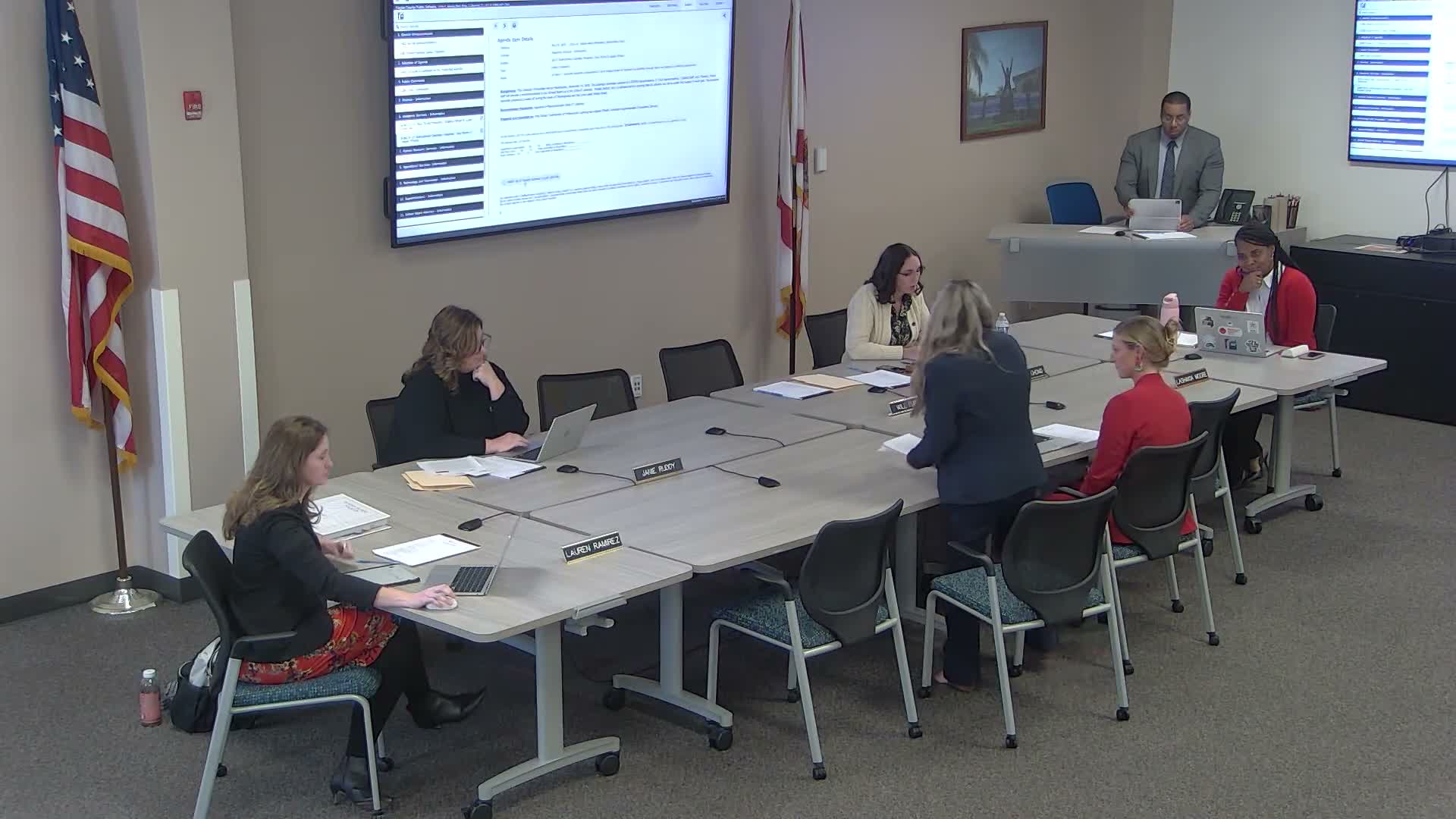
The school board spent substantial time at the Dec. 16 workshop discussing professional learning (PL) time and how the district might structure early-release days to support teacher development without eroding planning or instructional minutes.
Speaker 7, responding to earlier questions, said the district provides 24 total hours per year of district-identified professional learning across four days, and noted surrounding counties vary widely in required PL hours (from about 6 to 28 hours in examples cited). "We are pretty comparable to surrounding districts with us having 24 hours total a year of called professional learning time on those four days," Speaker 7 said.
Board members and staff debated what counts as PL (district-directed training versus teacher-led professional learning communities), how early-release time should be labeled and structured, and how to protect contractually required instructional minutes. One board member urged creating common language so staff, teachers and parents know whether a release day is for professional learning or for teacher planning.
Concerns extended beyond teachers to support staff. Board members asked how early-release or PL scheduling would affect bus drivers, paraprofessionals and cafeteria workers who are scheduled only when students are present, and whether the district would have to make up lost instructional time. Several members requested data from districts that have run predictable weekly or monthly early-release models (for example, an hour every Monday) to assess outcomes, student-family predictability and childcare impacts.
The board asked staff to solicit teacher input — including from teachers currently in classrooms and from those new to the profession — and to return with clearer options, definitions and evidence about outcomes and operational impacts. The transcript shows discussion and requests for follow-up analysis but no formal action recorded in the workshop.