
School board reviews stakeholder survey on start times, flags transportation and childcare concerns
Get AI-powered insights, summaries, and transcripts
Subscribe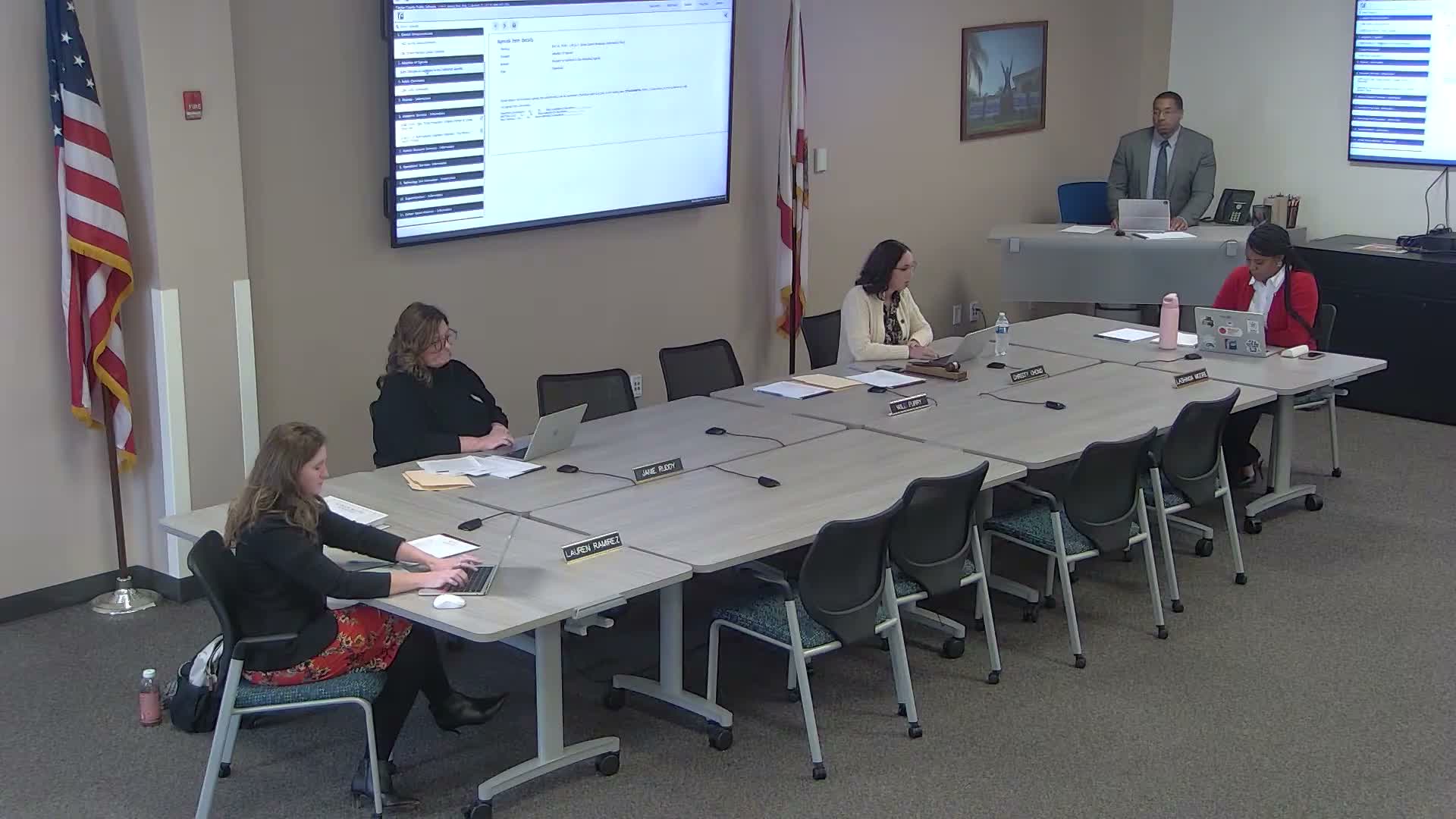
Summary
At a Dec. 16 workshop the Flagler County School Board reviewed about 2,000 stakeholder survey responses on proposed later school start times, hearing strong parent preference for same-grade-band bus routes and concerns about transportation costs, extracurricular disruption and childcare; staff will prepare the required report for the Florida Department of Education and return with transportation modeling.
At its Dec. 16 workshop the Flagler County School Board heard a staff presentation on stakeholder feedback about potentially changing school start times and the transportation implications of any shift.
Staff presenter (Speaker 6) said the district received roughly 2,000 survey responses, with the large majority from parents and guardians and 25% from Flagler Schools employees; roughly 46% of employee respondents were also parents. "We had about 2,000 responses, which I think is pretty good representation," Speaker 6 said.
The presentation noted one of the clearest results: more than 40% of respondents preferred students ride only with peers in their grade band rather than mixing elementary, middle and high school riders on the same buses. Staff explained that returning to a two-tier or hybrid bus model to accommodate later starts would likely require changing which grades share routes and could add routes or costs.
The presentation referenced state action that shaped local options: House Bill 733 (as discussed by staff) set minimum start times for middle and high schools, and the current rule allows local decisions with a report to the Florida Department of Education due by June 1 if a district proposes changes. "One of the requirements of that report is that we communicate the benefits of later start times with our community and families, and gather public input," Speaker 6 said.
Open-ended survey comments documented a range of concerns. Staff summarized recurring themes: conflicts with parents’ morning work schedules; potential disruption to high-school students’ after-school jobs and extracurricular activities; additional costs for before- and after-school care; bus overcrowding and safety worries about mixing grade bands; and, for a minority of parents (about 20%), the possibility of exploring other school options if start times change.
Board members asked several operational questions: whether the district had modeled feeder-pattern scheduling (grouping schools that share students) rather than grade-band groupings, how many additional bus routes different scenarios would require, and whether feeder-pattern alignment could reduce the need for a third transportation tier. Staff said feeder patterns are imperfect in Flagler — some elementary schools feed multiple middle or high schools — and committed to returning with transportation-specific data.
Members also weighed scientific findings about adolescent sleep against Flagler’s local constraints. "I truly believe in the science of more sleep," one board member said, while also noting the district’s infrastructure and safety differences. Another member raised contract and support-staff implications, asking how early-release or schedule shifts would affect bus drivers, paraprofessionals and other staff who work only when students are present.
Next steps recorded in the workshop: staff will prepare the district’s required report for the Florida Department of Education and follow up with transportation modeling and additional analysis of impacts on childcare, extracurriculars and support staff. No formal motion or vote on changing start times was recorded in the workshop transcript.
The workshop discussion did not reach a decision; the board asked staff to gather further data and return with options and cost estimates before any change would be proposed.