Get Full Government Meeting Transcripts, Videos, & Alerts Forever!
Get email alerts on the Police Overtime topic
No spam. Unsubscribe anytime.
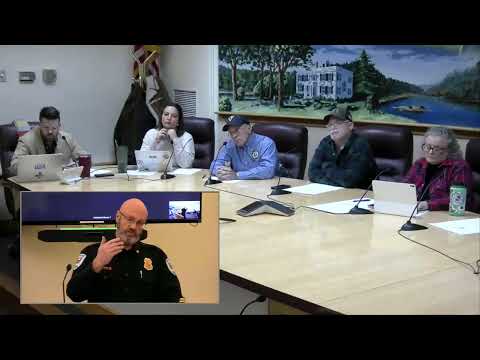
Finance Committee weighs formalizing overtime pay for exempt police managers
Summary
Finance Committee members heard police leadership and employees defend a long-standing practice that lets exempt police managers take patrol shifts for overtime pay amid staffing gaps. Staff were directed to prepare ordinance options, including a 24-hour public-safety exemption or a year-end sunset.
The Finance Committee heard extensive discussion on whether exempt management-level employees in the police department should continue to receive overtime pay as a formal policy or whether the practice should be ended.
A city staff member who opened the discussion said exempt employees receiving overtime is not written in the personnel ordinance and has been a past practice. The staff member said legal counsel had advised caution: when managers who assign overtime also receive it, it can create tensions between management and nonmanagement employees.
Police leadership and officers described operational reasons for the practice. "It's used for us to be able to fill in when somebody's out sick," said the police chief (name not specified), arguing that managers stepping into patrol or dispatch duties prevents forcing union officers to cover every absence and helps retention when the department is short-staffed. The chief said the department expects several employees to take paternity leave at the same time and is currently short "about four people." He added that newly hired staff will not be field-ready for months.
Detective Corey Baglin told the committee that being short-staffed had required investigative staff to cover patrol work and that managers stepping in has reduced paperwork burdens. "I was fortunate enough to have Captain Lord actually take several of those for me so I didn't have to be compelled to work," Baglin said.
Committee members raised fairness and budget concerns. One member noted that many management salaries in city government are six figures and asked whether exempt managers receiving overtime creates inequities with other departments. The same member cited the police department's overtime line, which he described as a major cost center and said amounts to approximately $373,900 in overtime funds for the department.
Board members discussed policy approaches. Some favored sunsetting the practice at the end of the fiscal year and budgeting for it explicitly; others proposed amending the personnel ordinance to allow overtime for exempt employees only in defined, 24-hour public-safety roles. "We can sunset this at the end of the year," the staff member said, while also asking HR to prepare formal ordinance options for the council to review.
The committee did not take a formal vote. Instead, members directed HR (Carrie) and city staff to draft two options — a public-safety (24-hour) exemption and a public-safety-only ordinance — and to return the proposals to the council for further consideration during the budget cycle.
Next steps: HR will prepare ordinance language and a sunset option for council review; the council will decide during upcoming budget discussions whether to formalize the practice, limit it to certain departments, or sunset it at year-end.