
Ellis County authorizes PBC bond process for building projects and approves year‑end transfers to capital funds
Get AI-powered insights, summaries, and transcripts
Subscribe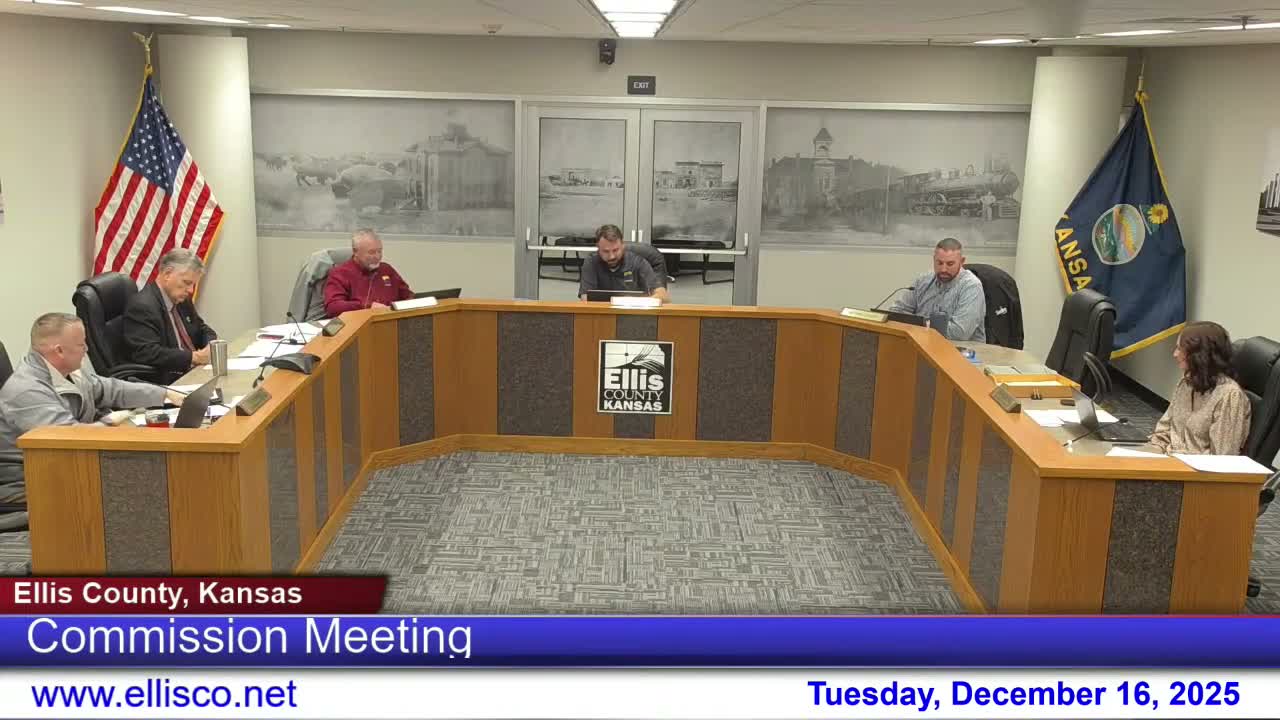
Summary
The commission passed a resolution authorizing the Public Building Commission to pursue up to $11 million in bonds (with a $10 million project cap) for building projects including law enforcement center remodels and approved estimated year‑end budget transfers to bolster capital funds.
Ellis County commissioners authorized the Public Building Commission (PBC) on Dec. 16 to initiate bond issuance steps to finance county building projects, and approved year‑end transfers to strengthen capital equipment and improvement funds.
County administrator Darren Myers said the list of five priority projects — including a remodel of the law enforcement center’s main floor and communications center — originally totaled about $10.77 million; the commission previously set a conservative budget cap of $10 million. To cover bond issuance costs, staff recommended putting a cap of $11 million on the PBC resolution so that issuance fees do not reduce the $10 million available for project work.
Financial adviser Larry Kliman of Ransom Financial described the process: the PBC would publish a resolution of intent, accept competitive bids and then (absent a successful protest) issue bonds roughly 30 days after publication. Kliman estimated a sample bid around 3.75% interest over 10 years for a small standalone issue but said exact terms depend on market conditions and whether the PBC can combine this issuance with other county bond needs to attract better rates.
The commission voted, 3–0, to approve Resolution 2025‑20 authorizing the PBC to proceed. Commissioners emphasized they would return to precise amounts and financing details in February after public notice and further refinement.
Separately, staff proposed year‑end fund transfers under county policy that would move an estimated $1,266,000 to capital equipment and facility improvement funds (with some departments transferring 75% rather than the standard 50% to support building projects and an ERP reserve). The commission authorized the county administrator to execute the year‑end transfers as listed on staff spreadsheets; motion passed 3–0.
The actions set the county on a path to finalize bonding and use year‑end savings to build capital reserves ahead of the planned projects.