
Architects, residents and commissioners debate ADUs and objective design standards under state law
Get AI-powered insights, summaries, and transcripts
Subscribe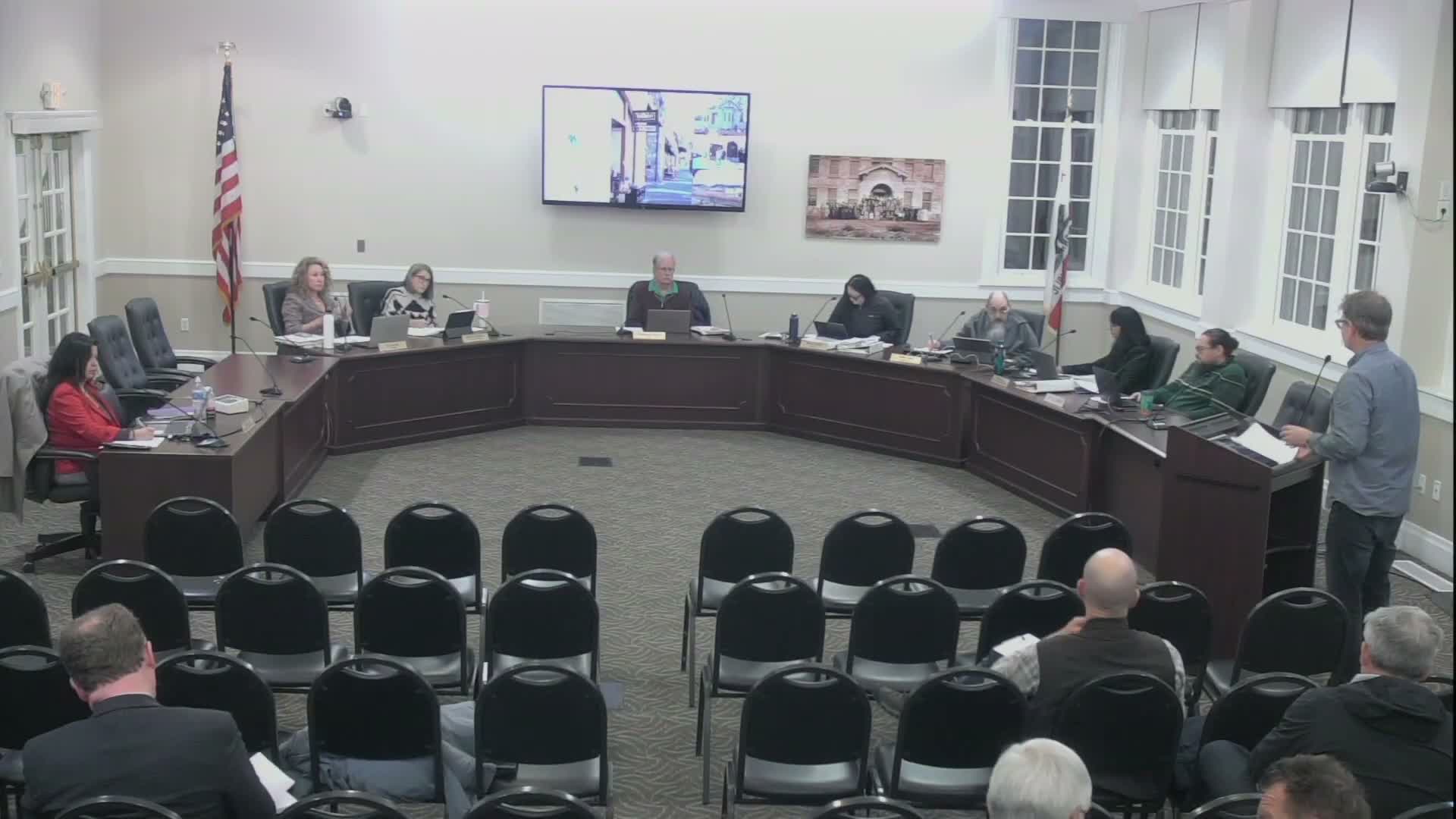
Summary
Design professionals and residents told the commission that objective design standards, ADU architectural limits and ADU counting rules are constraining housing outcomes; staff said state law (SB 330) limits local flexibility and that some design provisions were converted into objective standards to comply with state requirements.
Several speakers used the Dec. 16 special meeting to press the commission on how objective design standards and ADU rules affect housing and neighborhood character.
Architect David Crimmins highlighted inconsistent stepback and setback rules for corner lots that can encourage two‑story walls facing streets and recommended modifying street‑side stepbacks so second floors step back from the ground floor. Chef Elliot Bell and Scott Gay (a winery representative) asked the commission to relax prohibitions on limited outdoor storage in the Central Business and Mixed‑Use zones, saying some downtown businesses need small permitted storage areas to operate safely.
Charles Cavells and other commenters argued that the rewrite converted nonbinding design guidelines into prescriptive design standards that effectively regulate architectural style. Cavells said design guidelines are nonbinding while standards are laws that regulate design and that the community felt the change was not clearly communicated.
Director Maya DeRosa responded that state law changes, including the Housing Accountability Act (SB 330) and related housing statutes and case law, constrained the city's options: if architectural or design controls are placed in the municipal code they must be objective and prescriptive; otherwise jurisdictions risk losing authority to enforce them. DeRosa said staff worked with legal counsel to scrub guidelines into prescriptive, objective standards where code placed architectural controls into the zoning code.
ADU issues drew specific attention. Commissioner Covell and others noted that the code currently excludes ADUs from satisfying certain affordable housing requirements and contains architectural and utility rules (for example window treatment requirements for ADUs less than 30 feet from a property line and separate water connections) that make ADUs harder to rent or use as affordable units. Commissioner Covell argued those development standards can prevent ADUs from serving as practical affordable housing options.
What’s next: Commissioners asked staff to compile a prioritized list of design standards to review and propose specific edits. Staff also said the housing element annual progress report will be prepared as part of routine reporting and that staff will return with a timeline for the deeper code reviews.