Get Full Government Meeting Transcripts, Videos, & Alerts Forever!
Get email alerts on the Transportation Landscaping topic
No spam. Unsubscribe anytime.
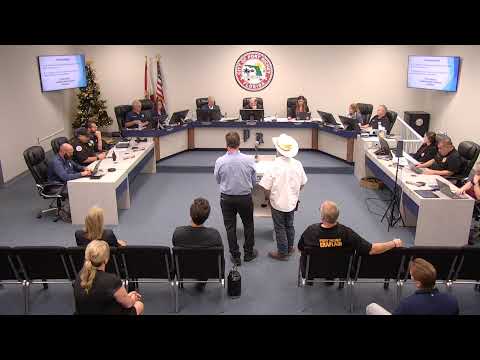
Port Richey approves Kimley Horn for US‑19 median design using FDOT grant
Summary
The Port Richey City Council approved awarding a $45,000 design contract to Kimley Horn funded through a $450,000 FDOT grant for US‑19 median landscaping. Councilors and residents pressed for low‑maintenance, Florida‑friendly plantings and greater visibility of competing bids.
Port Richey City Council voted to approve hiring Kimley Horn to produce design plans for landscaping the medians of U.S. 19, using design funding allowed under a $450,000 grant from the Florida Department of Transportation.
City Manager Andrew Butterfield told the council the FDOT award allows up to 10% of the grant — $45,000 — to be used for design work and that the proposed Kimley Horn fee fits inside that cap. "The grant's gonna cover that," Butterfield said, noting the city would not need to expend general fund dollars for the design phase.
Council members pressed staff on what the $45,000 would buy and how much board input the city would have. Staff replied that the award covers the design fee and that the city will hold workshops with the chosen designer. "We're gonna have workshops with the designer, tell them what they want," staff said, and noted city staff (including Daryl and Derek) will participate in the process.
Several council members and public commenters urged low‑maintenance, Florida‑friendly plantings that would not quickly wash away or obstruct driver sightlines. Resident Devin Aaron urged a smaller, non‑obstructive palette and recommended species such as foxtail palms rather than "cabbage palms," which he said frequently fail when transplanted. "You can actually see what's going on," he said of lower plantings that improve visibility.
Staff also explained the procurement process: four firms submitted proposals and a three‑member evaluation committee scored firms on experience, location and years doing this work; price was a factor but not the only consideration. Staff said two other proposals came in at about $37,000 and $79,000, while another was above $100,000; Kimley Horn’s proposal was $45,000 and within the 10% grant allowance.
At the council's request, staff agreed to provide more visibility into bid packages going forward so members can see the competing proposals and scoring. The council then moved, seconded and voted to accept the staff recommendation to proceed with Kimley Horn’s design proposal. The board directed staff to schedule public workshops on the design and to return to the council for review and final approval of design documents.
The approval covers only design work under the FDOT grant; construction contracts and any required construction‑phase guarantees will come back to the council for later review. Staff said the construction contract typically includes at least a one‑year plant replacement guarantee to address plants that fail shortly after installation.